The best link building packages offer the right balance of quality backlinks and fair pricing with long-term SEO results. With so many local and international providers in the market, it can be hard to understand what you are actually paying for and which package offers the best return. Many agencies design their packages to look affordable and attractive by highlighting large numbers and low prices. It can feel like a great deal, but the actual quality is often much lower than it seems. That is why it is important to know what to check before buying.
Best link building packages – Key highlights
- The best link building packages usually cost between $1000 and $5000+ per month for basic plans, while the average cost of a single high-quality backlink ranges from $300 to $600.
- Many link building companies offer monthly packages with a set number of backlinks, along with features like reporting and content creation.
- Link building packages are often more cost-effective than buying individual links, because bundled pricing reduces the average cost per backlink.
- Lower-cost packages may offer links starting as low as $50 to $200, but these are often from low-quality websites.
- The number of backlinks in a package can range from 5 to 10 high-quality links per month to 50 or more in volume-based plans.
In this guide, we review the 5 best link building packages in 2026 with complete pricing details and show you how to choose the best option based on your goals.
What are link building packages?
Link building packages are structured SEO services created by agencies and companies where they bundle backlinks into monthly or yearly plans. Instead of buying links one by one, you choose a package that builds links over time. These packages are designed to simplify link building, control costs, and support consistent results through ongoing outreach and placements.
What does a link building package include?
The best link building packages include the following things:
- Fixed number of backlinks based on the package
- Outreach to website owners and publishers
- Content creation for guest posts
- Link placement on websites with DR, traffic, and niche details
- Anchor text planning to keep the links natural
- Reporting with live links and basic performance details
Quick comparison of the best link building packages
Here is a quick side-by-side comparison of the best link building packages based on pricing and ideal use case.
| Company | Pricing | Links per package | Cost per link | Best for |
| Linksman | $399 to $999 | 3 to 5 links | $80 to $200 | Value for money + control |
| Jeenam | $1250 to $5100 | 5 to 30 links | $170 to $250 | B2B SaaS link building |
| Editorial.Link | $1750 to $6000 | 5 to 20 links | $300 to $375 | High-authority editorial links |
| FatJoe | $685 to $5480 | 5 to 15 links | $130 to $275 | Budget + scalable campaigns |
| LinkBuilder.io | $2999 to $19,999 | 8 to 50+ links | $250 to $375 | Premium managed campaigns |
Top 5 best link building packages in 2026
Here are the five best link building packages we have shortlisted based on pricing and link quality along with overall value they offer to businesses. We have included different types of packages to match various budgets and link building strategies.
1. Linksman
Best link building packages for value for money
Rating: 4.9/5
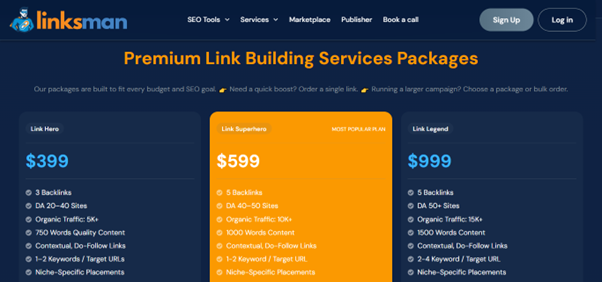
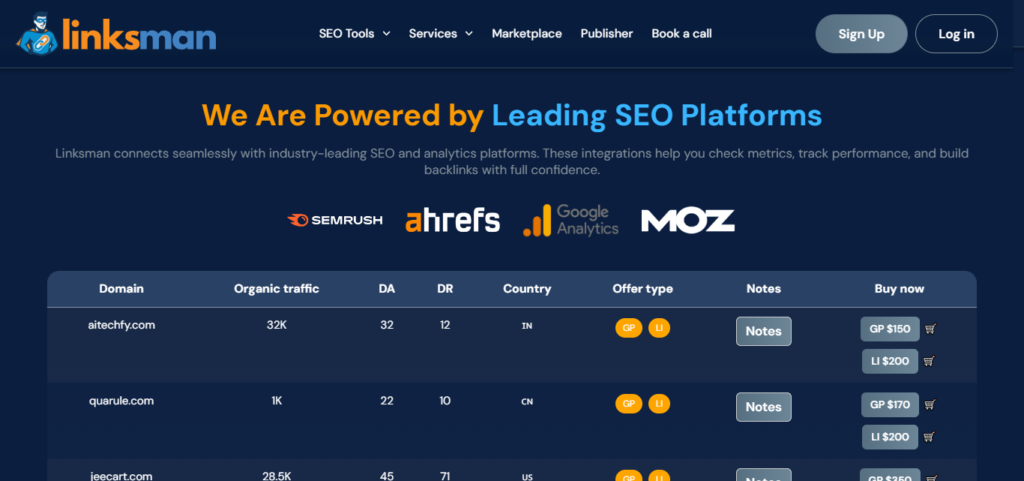
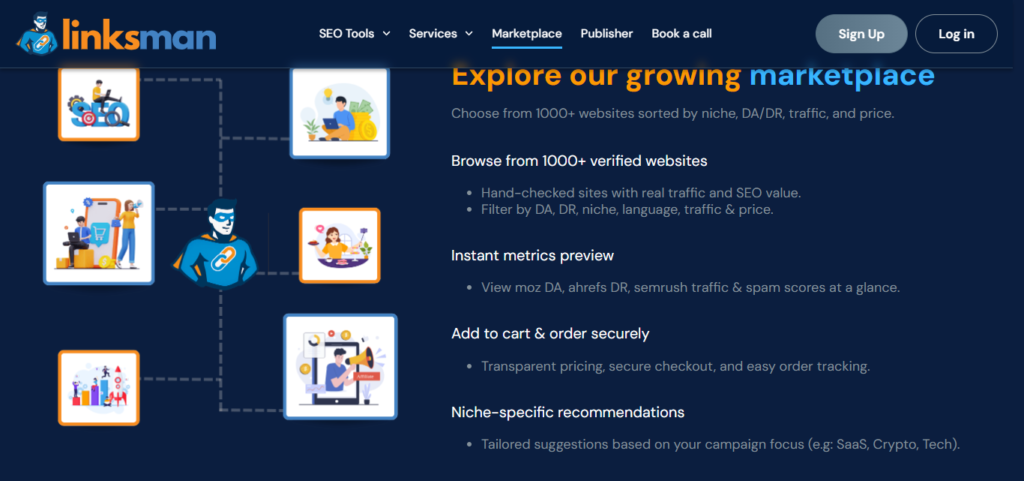
Linksman is a link building marketplace that offers three competitive link building packages for all types of businesses. We run an AI-powered link building marketplace that connect you with 1000+ verified publishers with genuine audiences across 30+ diverse niches. Our link building packages include contextual and dofollow links on quality websites of your choice.
We give you complete freedom to select the websites where your link will be placed. You can check key metrics like domain authority, traffic, and niche relevance to choose the best site for your links. Linksman only uses white-hat SEO techniques like guest posts and niche edits for backlinks. Our link building packages are designed for businesses that want more control over link quality and pricing, while avoiding the time and uncertainty of manual outreach.
Package and Pricing:
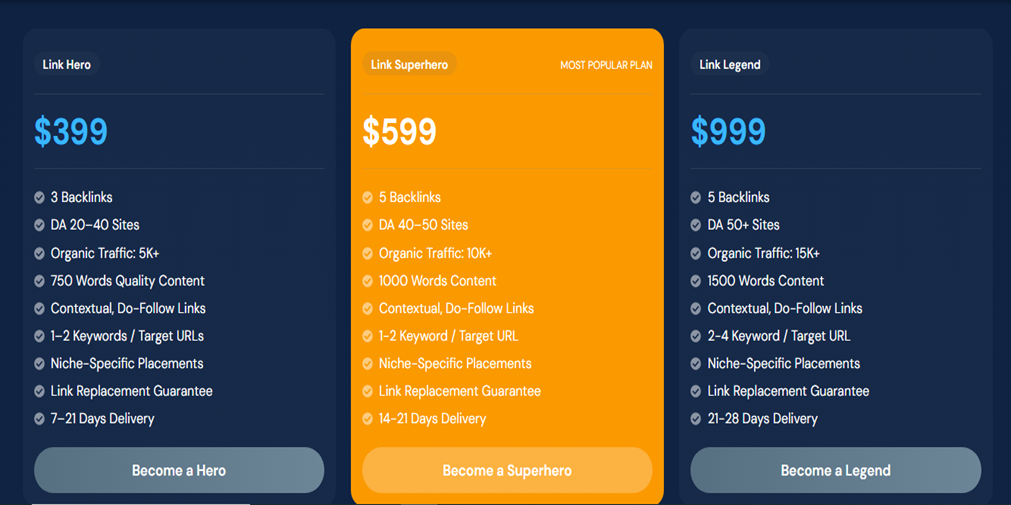
Linksman offers both fixed packages and flexible pricing based on placements. Main packages include:
- Link Hero – $399 (3 backlinks)
- Link Superhero – $599 (5 backlinks)
- Link Legend – $999 (5 backlinks)
What the Package Includes:
- 3 to 5 backlinks depending on the selected plan
- Placement on sites with DA 20 to 50+
- Websites with 5K to 15K+ organic traffic
- 750 to 1500 words of content per placement
- Contextual do-follow backlinks
- 1 to 4 target keywords or URLs
- Niche-specific placements across 30+ industries
- Link replacement guarantee
- Delivery timelines between 7 to 28 days
|
Pros |
Cons |
|
Affordable link building packages |
Relatively new platform |
| Free SEO tools within the platform | Smaller network than established competitors |
| Clear metrics like DA, DR, and traffic before purchase |
Quality depends on publisher selection |
|
100% transparent pricing without hidden charges |
|
| Direct contact with publishing websites | |
|
Multiple link types: guest posts, niche edits, and more |
Is Linksman worth the price?
Linksman offers the best link building packages with strong value for money, especially for businesses that want quality links without paying premium agency prices. The combination of transparent metrics, flexible pricing, and access to verified sites makes it a practical option for small to mid-sized campaigns. However, results depend on choosing the right publishers, so some level of selection is required.
2. Jeenam
Best link building packages for B2B SaaS companies
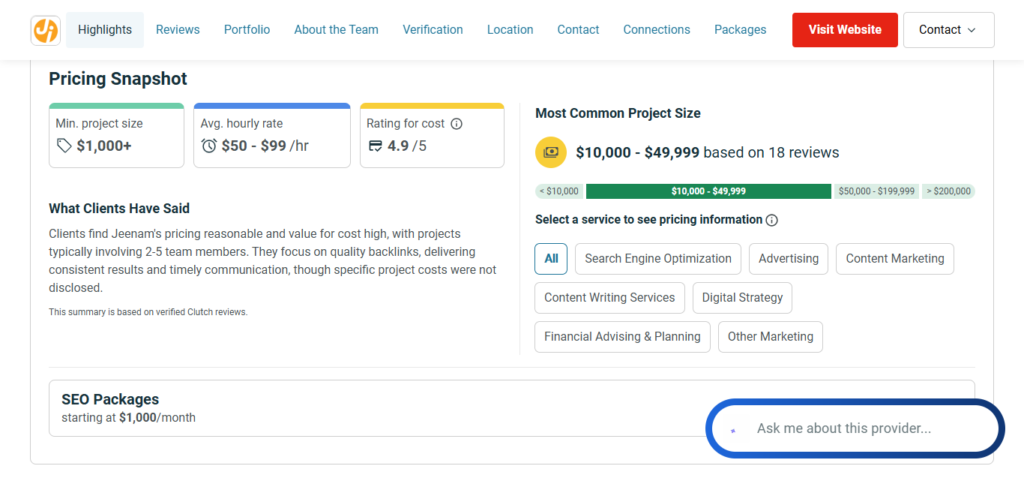
Clutch Rating: 4.9/5
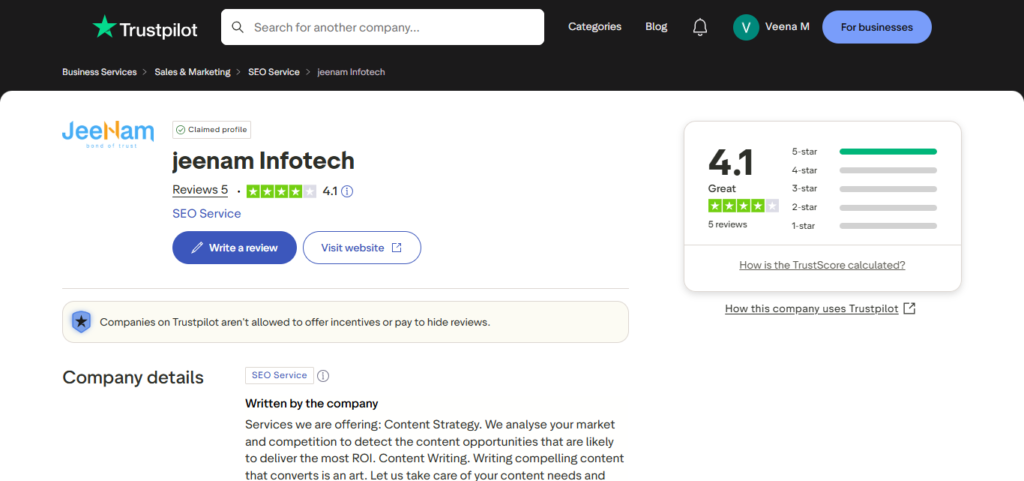
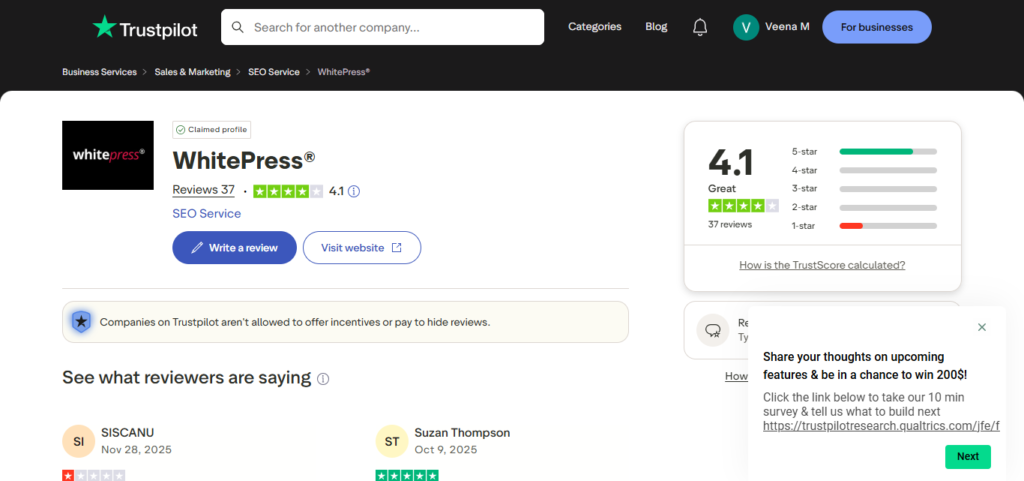
Trustpilot Rating: 4.1
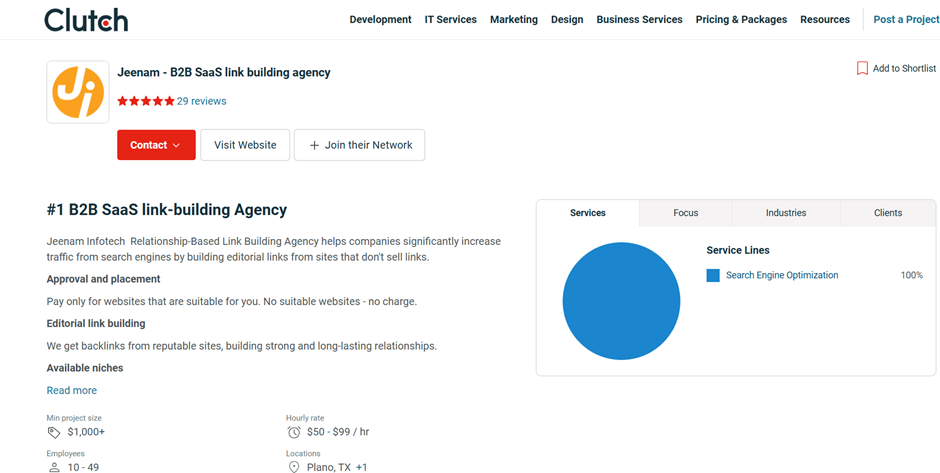
Jeenam is a Saas link building agency that offers backlink packages to B2B SaaS companies. It uses manual outreach to secure backlinks from relevant websites instead of relying on marketplaces or bulk placements. The agency mainly works with SaaS, technology, finance, healthcare, and e-commerce brands across English-speaking markets. It is a suitable option for businesses that want measurable increase in traffic as well as domain authority.
Package and Pricing:
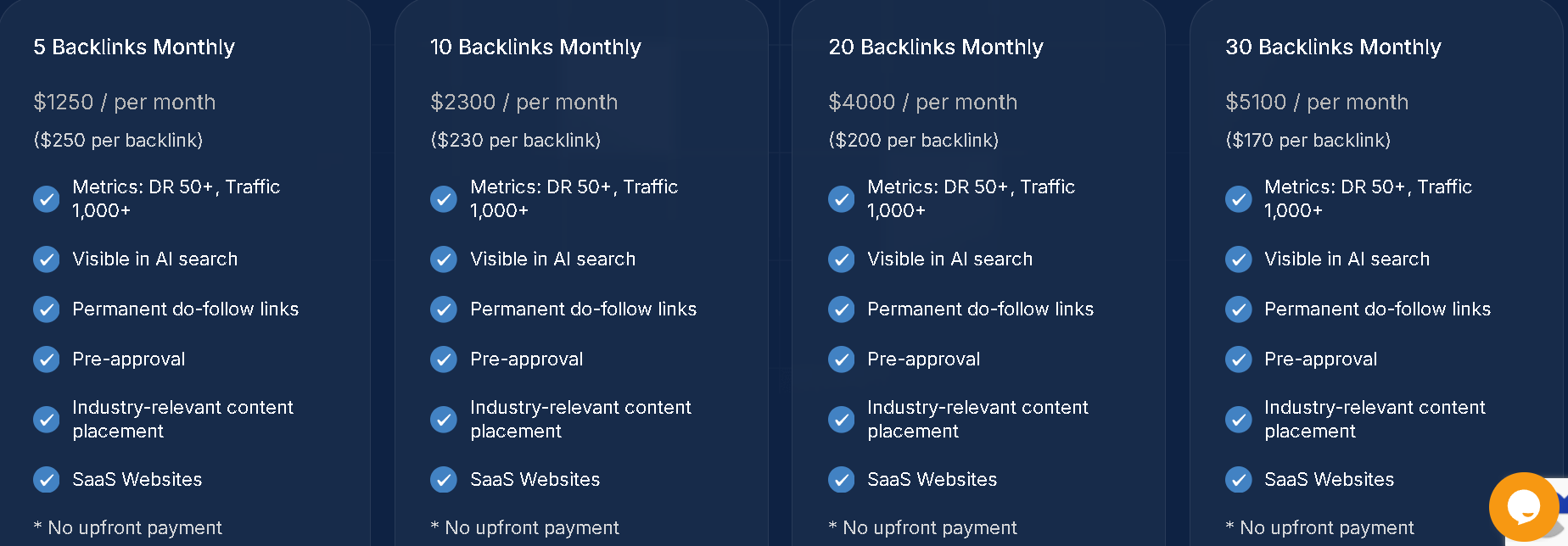
Jeenam offers monthly link building packages based on the number of backlinks:
- Starter – $1250/month (5 backlink)
- Basic – $2300/month (10 backlinks)
- Growth – $4000/month (20 backlinks)
- Popular – $5100/month (30 backlinks)
What the Package Includes:
- 10 to 30 backlinks per month depending on the plan
- Placements on websites with DR 50+ and 1000+ traffic
- Permanent do-follow backlinks
- Manual outreach and editorial placements
- Pre-approval of websites before placement
- Industry-relevant content placement
- Optimized anchor text strategy
- Performance tracking and reporting
- Focus on SaaS and niche-specific websites
|
Pros |
Cons |
|
Strong focus on B2B SaaS niches |
Higher pricing compared to basic packages |
|
High-quality links from DR 50+ sites |
Not suitable for very small budgets |
|
Manual outreach for better placements |
Slower compared to marketplace platforms |
|
Transparent communication and reporting |
Limited to English-focused markets |
|
Partnerships with top publishers like HubSpot, Monday.com, and more |
|
|
No upfront payment structure |
Is Jeenam worth the price?
Jeenam is well suited for SaaS businesses that want links from niche-relevant websites through a more hands-on approach. Instead of focusing on volume, it prioritizes placements within industry-specific content that match with your target audience. The pricing is higher than most basic packages, but the results are long-term and sustainable.
3. Editorial.Link
Best link building packages for high-authority editorial links
Clutch Rating: 5/5
Trustpilot Rating: 4.2
Editorial.Link is a link building agency that focuses on securing backlinks through editorial placements on high-authority websites. Instead of offering bulk links, it emphasizes quality placements within real content that already has traffic and relevance.
The service is designed for businesses that want backlinks from trusted publications and are willing to invest more for stronger SEO impact. It follows a relationship-based outreach approach and prioritizes long-term results over link volume.
Package and Pricing:
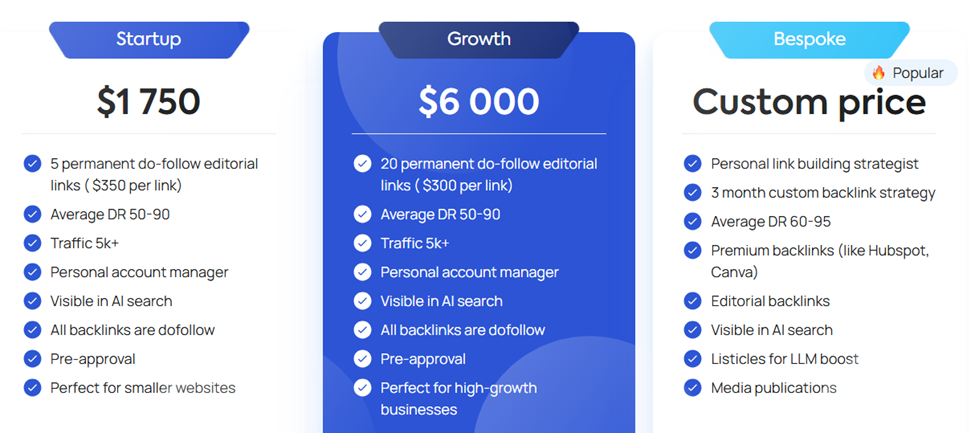
Editorial.Link offers standard packages with decreasing cost per link as volume increases:
- Startup – $1750 (5 backlinks)
- Growth – $6000 (20 backlinks)
- Bespoke – Custom pricing
The base rate starts around $375 per backlink, with better pricing in larger packages.
What the Package Includes:
- 5 to 20 backlinks depending on the plan
- Placements on sites with DR 50 to 90+
- Websites with 5K+ organic traffic
- Permanent do-follow editorial backlinks
- Pre-approval of websites before placement
- Personal account manager or strategist
- Industry-relevant placements
- Visibility in AI search and listicle placements in higher plans
- Option for custom link strategies in bespoke campaigns
|
Pros |
Cons |
| High-authority editorial backlinks | Higher pricing than most packages |
| Trial backlink before placing order | Limited volume in basic plans |
| Site vetting option | Longer timelines for premium links |
| Dedicated account manager support | |
| Link replacement guarantee |
Is Editorial.Link worth the price?
Editorial.Link is a good fit for businesses that want placements on well-established websites with strong authority and real traffic. The pricing is higher compared to most packages, but it focuses on securing links from trusted publications rather than increasing link count. This makes it suitable for brands that want fewer but more impactful backlinks as part of a long-term SEO strategy.
4. FatJoe
Best budget-friendly and scalable link building packages
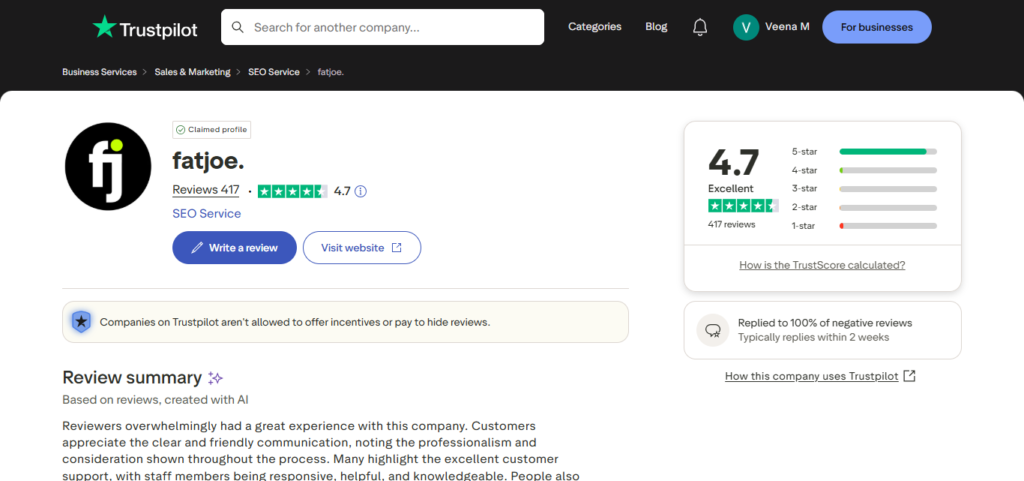
Trustpilot Rating: 4.7
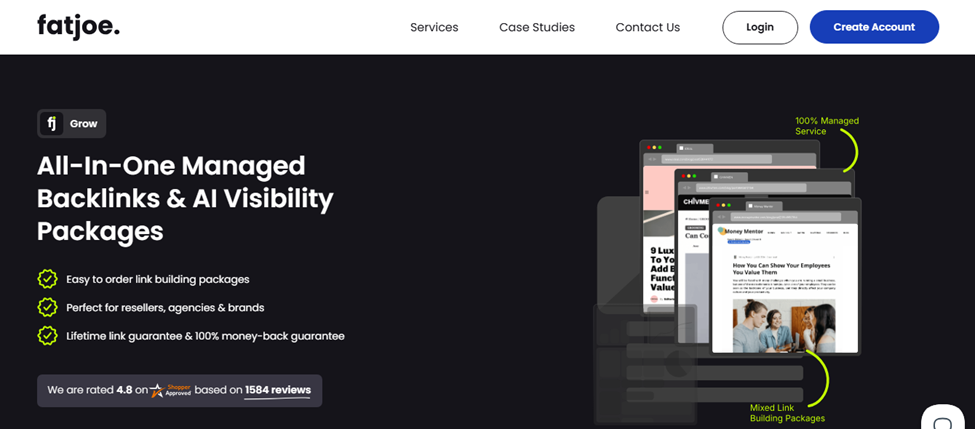
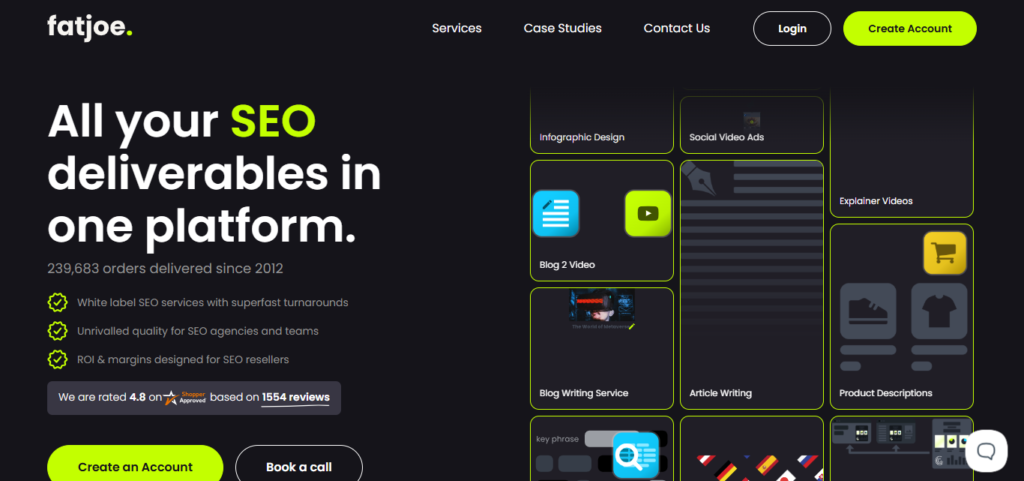
FatJoe Grow package is designed as a simple and done-for-you link building solution where you choose a package and the team handles the rest. It is built mainly for agencies, resellers, and brands that want regular backlinks without managing outreach or strategy themselves.
Instead of customizing every campaign, the service follows a standard system where links are placed based on predefined ratios and best practices. This makes it easier to scale link building across multiple projects.
Package and Pricing:
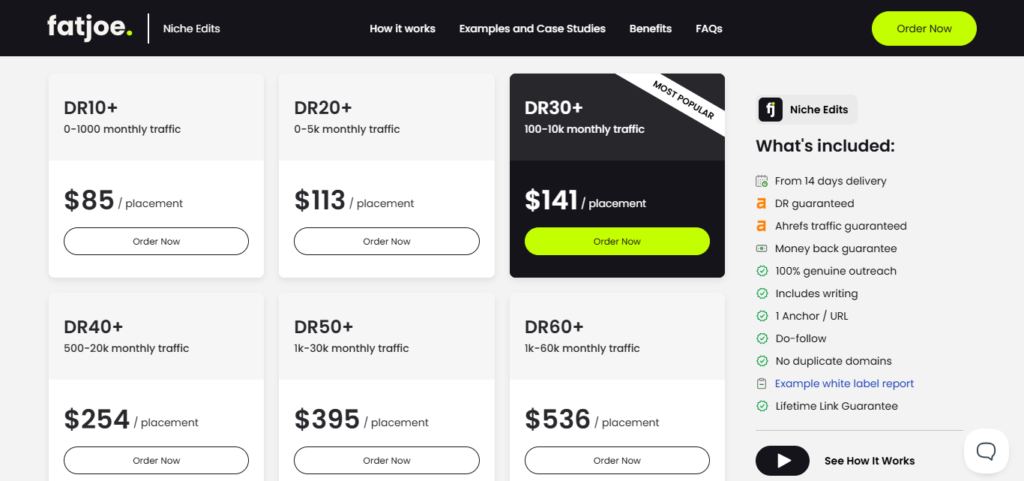
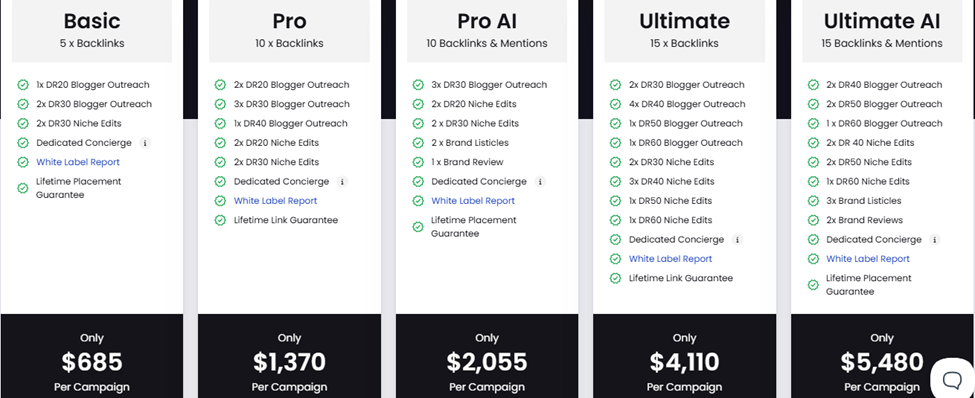
FatJoe offers fixed packages based on the number and type of backlinks:
- Basic – $685 (5 backlinks)
- Pro – $1370 (10 backlinks)
- Pro AI – $2055 (10 backlinks + mentions)
- Ultimate – $4110 (15 backlinks)
- Ultimate AI – $5480 (15 backlinks + mentions)
- Cost per link: Approx $130 to $275 depending on the package
What the Package Includes:
- 5 to 15 backlinks per campaign
- Mix of blogger outreach and niche edits
- DR 20 to DR 60+ placements depending on plan
- Pre-defined anchor text and URL distribution
- Dedicated account concierge for order handling
- White label reporting for agencies
- Lifetime link placement guarantee
- Delivery timeline of around 14 to 28 days
|
Pros |
Cons |
|
Easy to order and scale across multiple campaigns |
Limited control over link selection |
|
Suitable for agencies and resellers |
Not fully customized strategy |
|
Built-in best practice anchor and URL ratios |
Lower DR links in basic plans |
|
White label reports for client work |
|
|
Lifetime link guarantee |
Is FatJoe worth the price?
FatJoe is a practical choice for agencies and businesses that want a simple and repeatable link building process. It works well when you need consistent backlinks without spending time on outreach or planning. However, it is better suited for scale and convenience rather than highly targeted or niche-specific link building.
5. LinkBuilder.io
Best link building packages for premium and high-end campaigns
Clutch Rating: 5/5
LinkBuilder.io is a link building agency that offers fully managed monthly packages focused on high-authority backlinks and long-term SEO growth. Instead of offering basic link bundles, it provides a strategy-driven service where research, outreach, and placements are handled as part of a complete campaign. In several case studies, clients have seen traffic growth of over 100%. The links offered by this agency not only helps with Google search visibility but also in AI search visibility.
Package and Pricing:
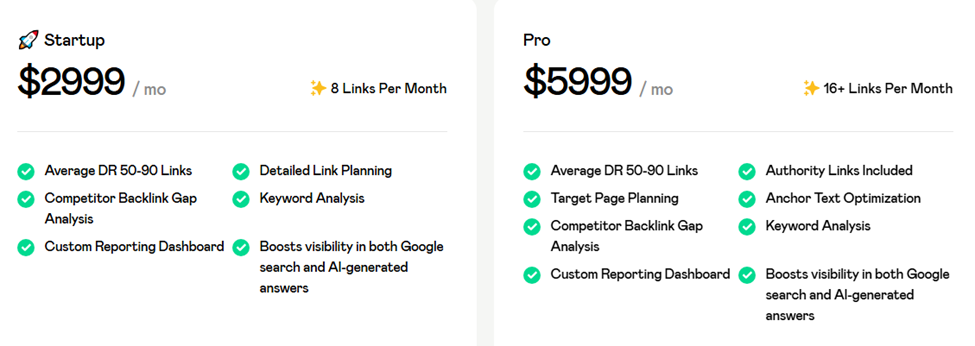
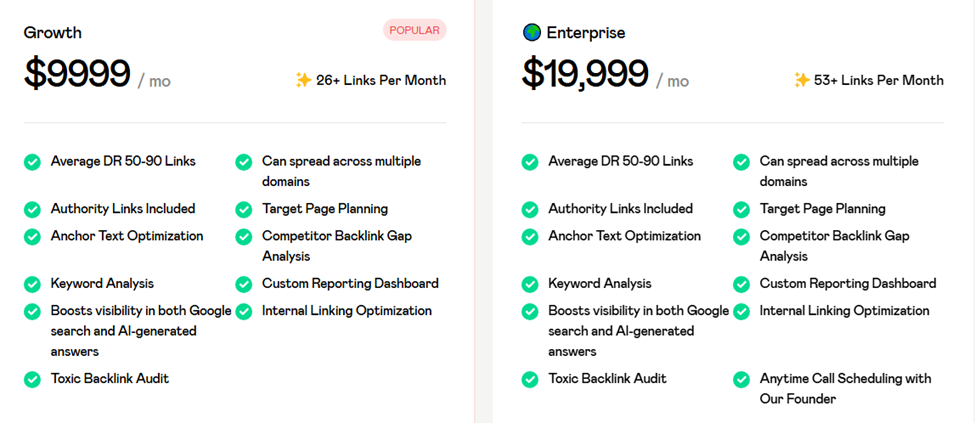
LinkBuilder.io offers monthly packages based on link volume and campaign scale:
- Startup – $2999/month (8 backlinks)
- Pro – $5999/month (16+ backlinks)
- Growth – $9999/month (26+ backlinks)
- Enterprise – $19,999/month (53+ backlinks)
- Cost per link: Approx $250 to $375 per backlink depending on the plan
What the Package Includes:
- 8 to 50+ backlinks per month depending on the plan
- Placements on websites with DR 50 to 90+
- Target page planning and keyword analysis
- Competitor backlink gap analysis
- Anchor text optimization
- Custom reporting dashboard
- Internal linking and backlink audits in higher plans
- Strategy-driven outreach and placements
|
Pros |
Cons |
|
High-authority backlinks (DR 50+) |
Very expensive for small businesses |
|
Offers SEO blog writing services |
Not suitable for low budgets |
|
Many other add-on services are available |
Requires long-term commitment |
|
Detailed reporting and analysis |
Limited flexibility for quick orders |
|
Suitable for scaling large campaigns |
Is LinkBuilder.io worth the price?
LinkBuilder.io works well for businesses that want someone else to handle link building from start to finish. The focus is not just on getting links, but on improving rankings for specific pages and keywords. The pricing is high, but it suits companies that want good progress and clear direction instead of random link placements or one-time campaigns.
How to choose the best link building packages?
Most link building packages look similar, but pricing can vary a lot. You might see 20 links for $1000 and 5 links for the same price. The difference usually comes down to link quality and how the links are built. If you don’t check properly, you can easily overpay or end up with low-quality links.
What to check before buying a link building package:
- Check real websites, not just metrics: Ask for sample sites. A DR 60 site with no traffic or spammy content has little value. Open the site and check if it looks real and active.
- Calculate cost per link properly: Divide total price by number of links. If you are paying $1000 for 20 links, that is $50 per link, which usually means low quality.
- Look at traffic, not just DR or DA: A good backlink should come from a site with real traffic, ideally 1K to 10K+ monthly visitors at minimum.
- Ask where your link will be placed: Links inside real content perform better than author bio or sidebar links. Always confirm placement type.
- Check if you can approve websites: Good providers let you review sites before placement. If not, you have no control over quality.
- Understand anchor text usage: Too many exact match keywords can harm your site. Ask how they balance brand, partial, and natural anchors.
- Ask about link permanence: Some links get removed after a few months. Confirm if links are permanent or have a replacement guarantee.
- Check delivery timeline vs promises: Getting 50 links in 5 days is a red flag. Good links usually take time because they involve real outreach.
- Avoid packages focused only on numbers: 50 cheap links rarely outperform 5 strong links. Focus on impact, not volume.
What to avoid when buying link building packages?
Many link building packages look attractive at first, but a few common signs can indicate poor quality or unnecessary risk. Here are the red flags to avoid:
- Very low pricing: Packages offering links at $20 to $50 each usually come from weak or spammy sites. These links rarely help rankings and can sometimes harm your site.
- No sample websites shared: If a provider does not show example sites before purchase, you have no idea where your links will go. This is a major risk.
- Guaranteed rankings or results: No agency can promise rankings because SEO depends on many factors. Such claims are often used to attract buyers, not reflect real outcomes.
Wrapping up
There is no single link building package that works for everyone. The right choice depends on your budget and the type of links your website needs. Focus on getting links from relevant and trustworthy websites instead of chasing higher numbers. Always check what is included and how the links are built before making a decision. If you are looking for the best link building packages, choose providers like Linksman that let you select websites and link types before placing an order. It is also a good idea to start with one link and review the results before committing to a full package.
FAQs About Link Building Packages
1. Should I pay per link or choose a link building package?
If you are testing a provider, start with a single link to check quality. Packages make more sense when you want consistent link building over time. They usually offer better pricing per link and save time compared to buying links one by one.
2. How much do the best link building packages cost?
Most link building packages cost between $1000 and $5000 per month. Premium services can go much higher depending on link quality and strategy. On average, a good backlink costs around $100 to $300, while high-authority links can cost $300+.
3. How many backlinks should I expect in a package?
It depends on pricing and quality. Lower-cost packages may offer 20 to 50 links, while high-quality campaigns usually include 5 to 15 links per month. Fewer but stronger links often have better impact.
4. Are cheaper link building packages worth it?
Low-cost packages often include links from weak or irrelevant websites. These links may not improve rankings and can sometimes harm your site. It is better to focus on fewer and higher-quality links.
5. Why should I buy link building packages instead of individual links?
Packages are easier to manage and often come with bundled pricing, which reduces the average cost per link. They also offer a steady flow of backlinks, which is better for SEO compared to random one-time links.
6. Can link building packages guarantee rankings?
No. No agency can guarantee rankings because SEO depends on many factors like content, competition, and website health. Good packages can improve your chances, but they cannot promise exact results.
7. Are link building packages safe for SEO?
They are safe if the links come from relevant websites and use natural anchor text. Avoid providers that use spammy sites or build links too quickly.
8. What is the biggest mistake people make when buying link building packages?
Focusing only on price and number of links. Many buyers choose cheaper packages with more links, but these often have little impact. Quality and relevance matter much more.