The 5 Best Link Building Packages in 2026: A Practical Buyer’s Guide

5 Best Link Building Packages in 2026: A Practical Buyer’s Guide

The best link building packages offer the right balance of quality backlinks and fair pricing with long-term SEO results. With so many local and international providers in the market, it can be hard to understand what you are actually paying for and which package offers the best return. Many agencies design their packages to look affordable and attractive by highlighting large numbers and low prices. It can feel like a great deal, but the actual quality is often much lower than it seems. That is why it is important to know what to check before buying.

Best link building packages – Key highlights

  • The best link building packages usually cost between $1000 and $5000+ per month for basic plans, while the average cost of a single high-quality backlink ranges from $300 to $600.
  • Many link building companies offer monthly packages with a set number of backlinks, along with features like reporting and content creation.
  • Link building packages are often more cost-effective than buying individual links, because bundled pricing reduces the average cost per backlink.
  • Lower-cost packages may offer links starting as low as $50 to $200, but these are often from low-quality websites.
  • The number of backlinks in a package can range from 5 to 10 high-quality links per month to 50 or more in volume-based plans.

In this guide, we review the 5 best link building packages in 2026 with complete pricing details and show you how to choose the best option based on your goals.

What are link building packages?

Link building packages are structured SEO services created by agencies and companies where they bundle backlinks into monthly or yearly plans. Instead of buying links one by one, you choose a package that builds links over time. These packages are designed to simplify link building, control costs, and support consistent results through ongoing outreach and placements.

What does a link building package include?

The best link building packages include the following things:

  • Fixed number of backlinks based on the package
  • Outreach to website owners and publishers
  • Content creation for guest posts
  • Link placement on websites with DR, traffic, and niche details
  • Anchor text planning to keep the links natural
  • Reporting with live links and basic performance details

Quick comparison of the best link building packages

Here is a quick side-by-side comparison of the best link building packages based on pricing and ideal use case.

Company Pricing Links per package Cost per link Best for
Linksman $399 to $999 3 to 5 links $80 to $200 Value for money + control
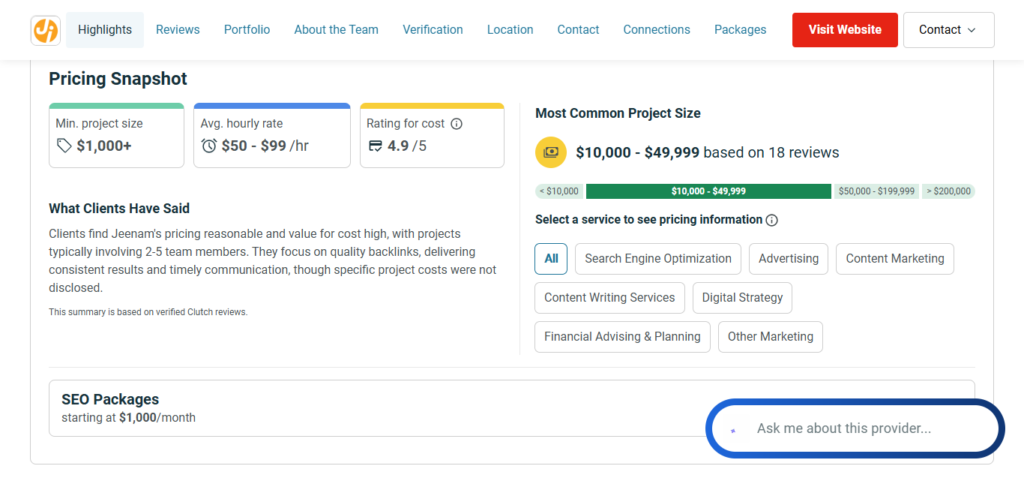
Jeenam $1250 to $5100 10 to 30 links $170 to $250 B2B SaaS link building
Editorial.Link $1750 to $6000 5 to 20 links $300 to $375 High-authority editorial links
FatJoe $685 to $5480 5 to 15 links $130 to $275 Budget + scalable campaigns
LinkBuilder.io $2999 to $19,999 8 to 50+ links $250 to $375 Premium managed campaigns

Top 5 best link building packages in 2026

Here are the five best link building packages we have shortlisted based on pricing and link quality along with overall value they offer to businesses. We have included different types of packages to match various budgets and link building strategies.

1. Linksman

Best link building packages for value for money

Rating: 4.9/5
Linksman - Buy Backlinks

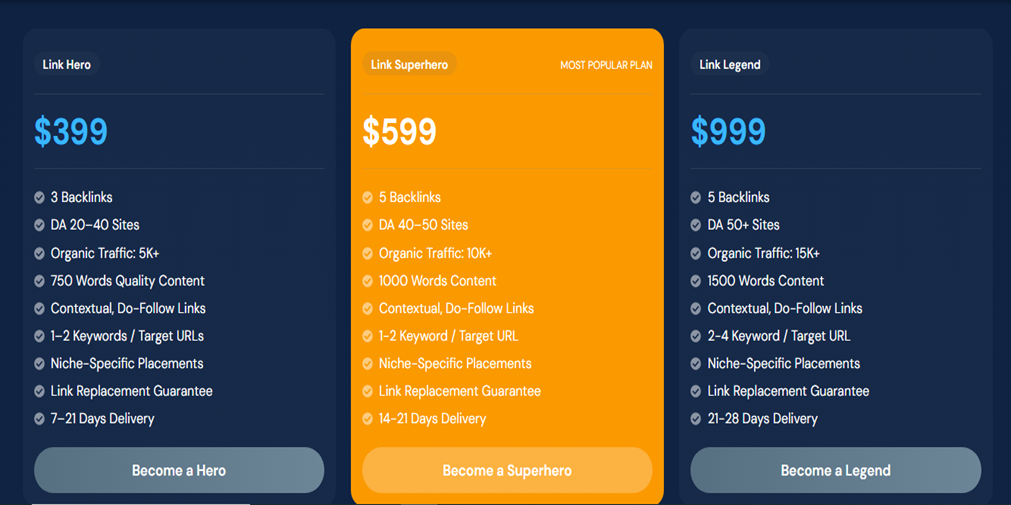
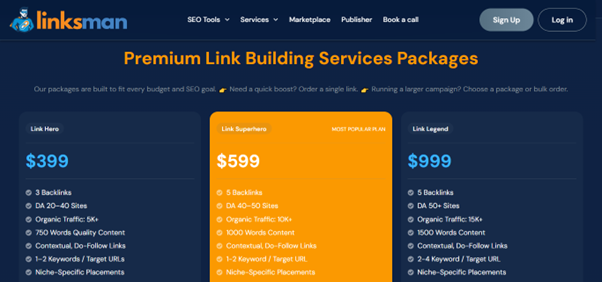
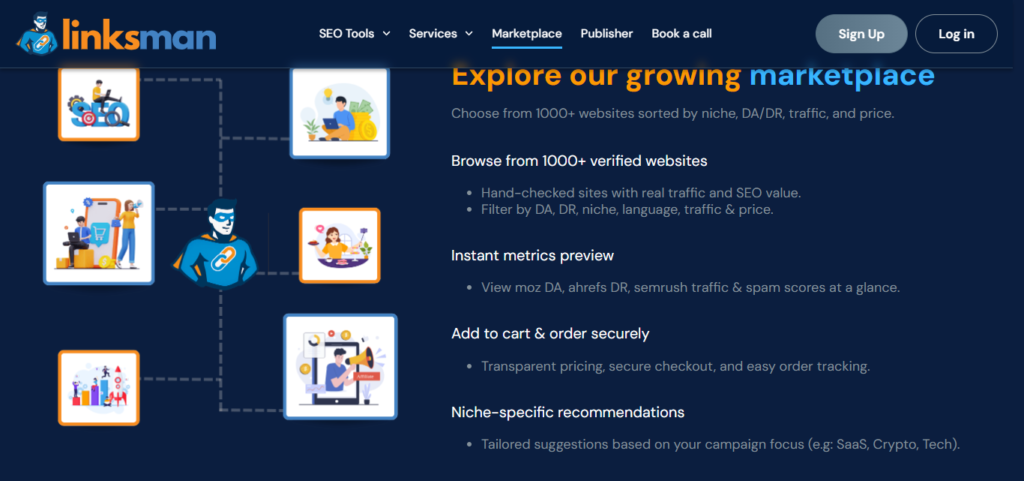
Linksman is a link building marketplace that offers three competitive link building packages for all types of businesses. We run an AI-powered link building marketplace that connect you with 1000+ verified publishers with genuine audiences across 30+ diverse niches. Our link building packages include contextual and dofollow links on quality websites of your choice.

We give you complete freedom to select the websites where your link will be placed. You can check key metrics like domain authority, traffic, and niche relevance to choose the best site for your links. Linksman only uses white-hat SEO techniques like guest posts and niche edits for backlinks. Our link building packages are designed for businesses that want more control over link quality and pricing, while avoiding the time and uncertainty of manual outreach.

Package and Pricing:

Linksman offers both fixed packages and flexible pricing based on placements. Main packages include:

  • Link Hero – $399 (3 backlinks)
  • Link Superhero – $599 (5 backlinks)
  • Link Legend – $999 (5 backlinks)

Linksman- Package and Pricing

What the Package Includes:

  • 3 to 5 backlinks depending on the selected plan
  • Placement on sites with DA 20 to 50+
  • Websites with 5K to 15K+ organic traffic
  • 750 to 1500 words of content per placement
  • Contextual do-follow backlinks
  • 1 to 4 target keywords or URLs
  • Niche-specific placements across 30+ industries
  • Link replacement guarantee
  • Delivery timelines between 7 to 28 days

Pros

Cons

       Affordable link building packages

     Relatively new platform
     Free SEO tools within the platform        Smaller network than established competitors
       Clear metrics like DA, DR, and traffic before purchase

       Quality depends on publisher selection

       100% transparent pricing without hidden charges

       Direct contact with publishing websites

     Multiple link types: guest posts, niche edits, and more

Is Linksman worth the price?

Linksman offers the best link building packages with strong value for money, especially for businesses that want quality links without paying premium agency prices. The combination of transparent metrics, flexible pricing, and access to verified sites makes it a practical option for small to mid-sized campaigns. However, results depend on choosing the right publishers, so some level of selection is required.

2. Jeenam

Best link building packages for B2B SaaS companies

Clutch Rating: 4.9/5

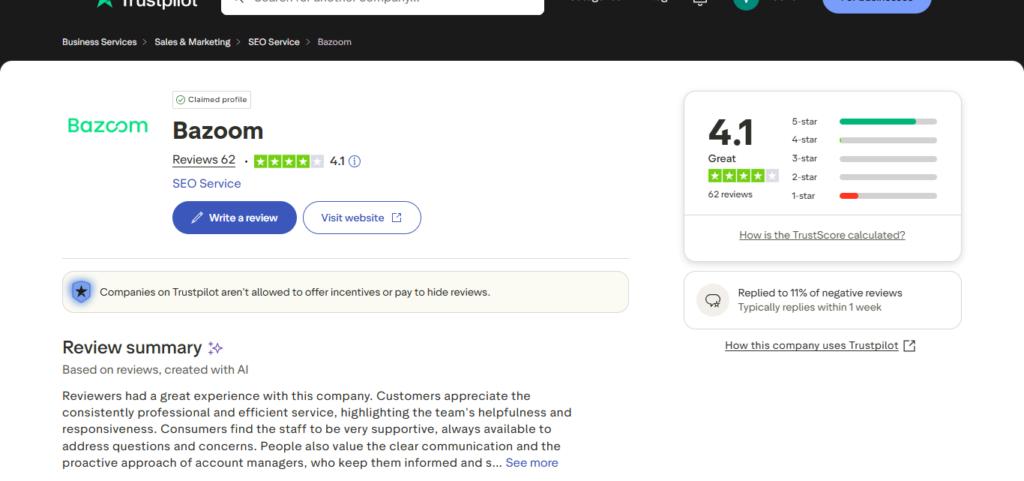
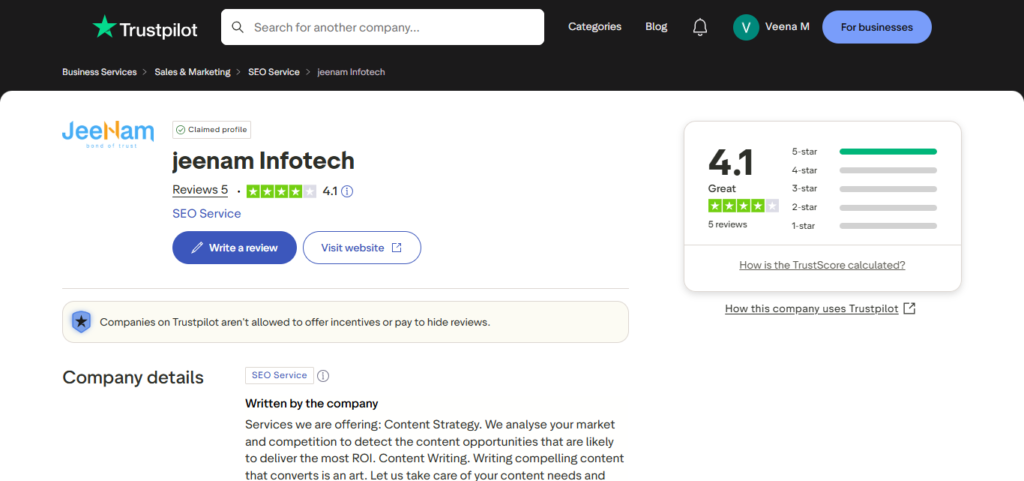
Trustpilot Rating: 4.1
Jeenam - Best Link Building

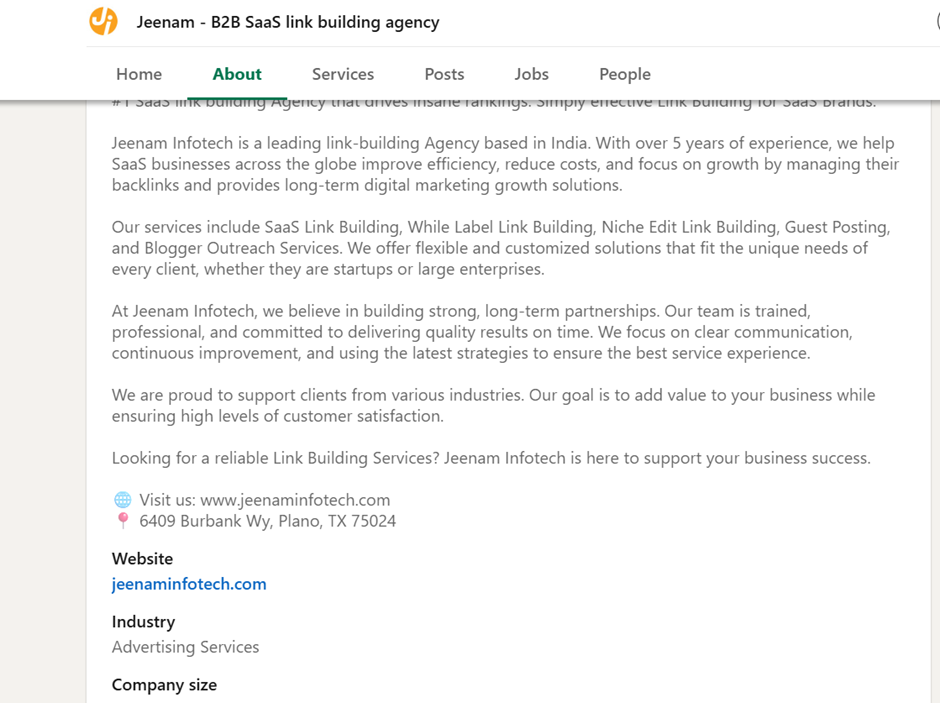
Jeenam is a Saas link building agency that offers backlink packages to B2B SaaS companies. It uses manual outreach to secure backlinks from relevant websites instead of relying on marketplaces or bulk placements. The agency mainly works with SaaS, technology, finance, healthcare, and e-commerce brands across English-speaking markets. It is a suitable option for businesses that want measurable increase in traffic as well as domain authority.

Package and Pricing:

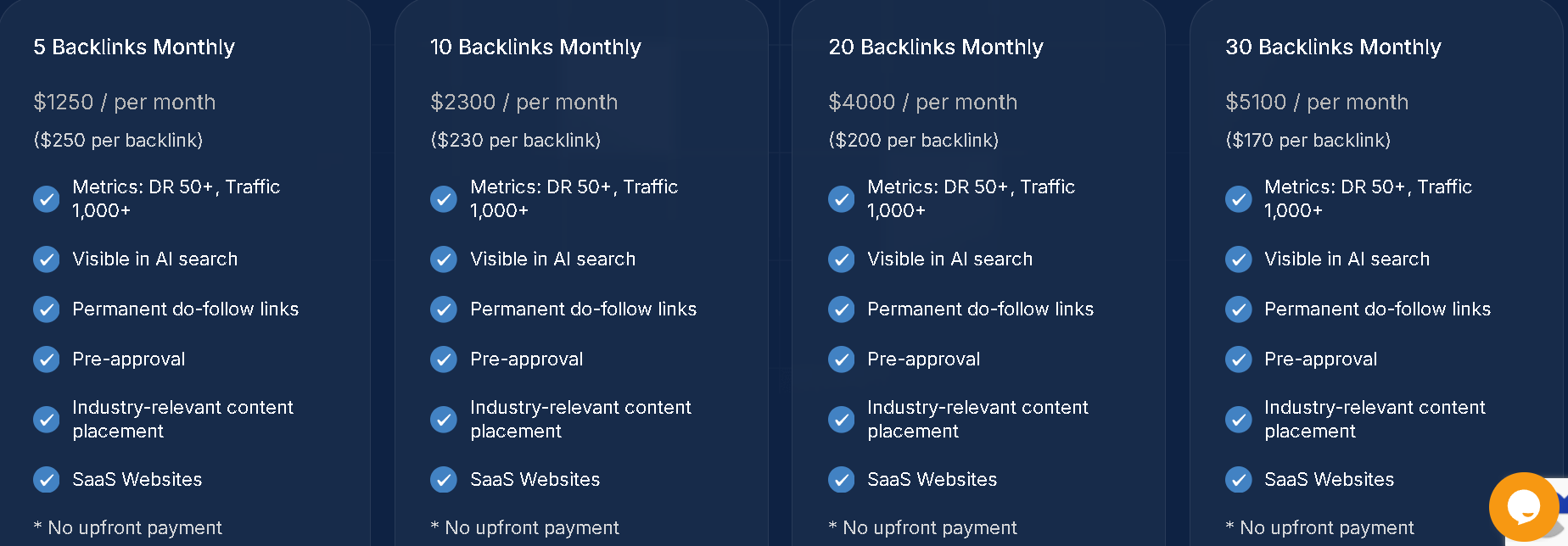
Jeenam offers monthly link building packages based on the number of backlinks:

  • Starter – $1250/month (5 backlink)
  • Basic – $2300/month (10 backlinks)
  • Growth – $4000/month (20 backlinks)
  • Popular – $5100/month (30 backlinks)

Jeenam - AI SEO Pricing

What the Package Includes:

  • 10 to 30 backlinks per month depending on the plan
  • Placements on websites with DR 50+ and 1000+ traffic
  • Permanent do-follow backlinks
  • Manual outreach and editorial placements
  • Pre-approval of websites before placement
  • Industry-relevant content placement
  • Optimized anchor text strategy
  • Performance tracking and reporting
  • Focus on SaaS and niche-specific websites

Pros

Cons

       Strong focus on B2B SaaS niches

     Higher pricing compared to basic packages

       High-quality links from DR 50+ sites

       Not suitable for very small budgets

       Manual outreach for better placements

       Slower compared to marketplace platforms

       Transparent communication and reporting

       Limited to English-focused markets

       Partnerships with top publishers like HubSpot, Monday.com, and more

      No upfront payment structure

Is Jeenam worth the price?

Jeenam is well suited for SaaS businesses that want links from niche-relevant websites through a more hands-on approach. Instead of focusing on volume, it prioritizes placements within industry-specific content that match with your target audience. The pricing is higher than most basic packages, but the results are long-term and sustainable.

3. Editorial.Link

Best link building packages for high-authority editorial links

Clutch Rating: 5/5

Trustpilot Rating: 4.2
Editorial Link- Link Building

Editorial.Link is a link building agency that focuses on securing backlinks through editorial placements on high-authority websites. Instead of offering bulk links, it emphasizes quality placements within real content that already has traffic and relevance.

The service is designed for businesses that want backlinks from trusted publications and are willing to invest more for stronger SEO impact. It follows a relationship-based outreach approach and prioritizes long-term results over link volume.

Package and Pricing:

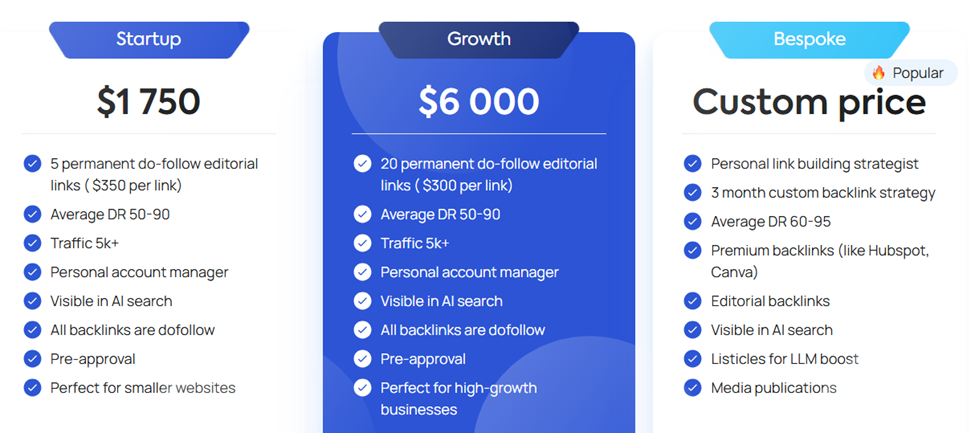
Editorial.Link offers standard packages with decreasing cost per link as volume increases:

  • Startup – $1750 (5 backlinks)
  • Growth – $6000 (20 backlinks)
  • Bespoke – Custom pricing

The base rate starts around $375 per backlink, with better pricing in larger packages.
Editorial Link - Pricing

What the Package Includes:

  • 5 to 20 backlinks depending on the plan
  • Placements on sites with DR 50 to 90+
  • Websites with 5K+ organic traffic
  • Permanent do-follow editorial backlinks
  • Pre-approval of websites before placement
  • Personal account manager or strategist
  • Industry-relevant placements
  • Visibility in AI search and listicle placements in higher plans
  • Option for custom link strategies in bespoke campaigns

Pros

Cons

      High-authority editorial backlinks        Higher pricing than most packages
       Trial backlink before placing order        Limited volume in basic plans
       Site vetting option        Longer timelines for premium links
       Dedicated account manager support
       Link replacement guarantee

Is Editorial.Link worth the price?

Editorial.Link is a good fit for businesses that want placements on well-established websites with strong authority and real traffic. The pricing is higher compared to most packages, but it focuses on securing links from trusted publications rather than increasing link count. This makes it suitable for brands that want fewer but more impactful backlinks as part of a long-term SEO strategy.

4. FatJoe

Best budget-friendly and scalable link building packages

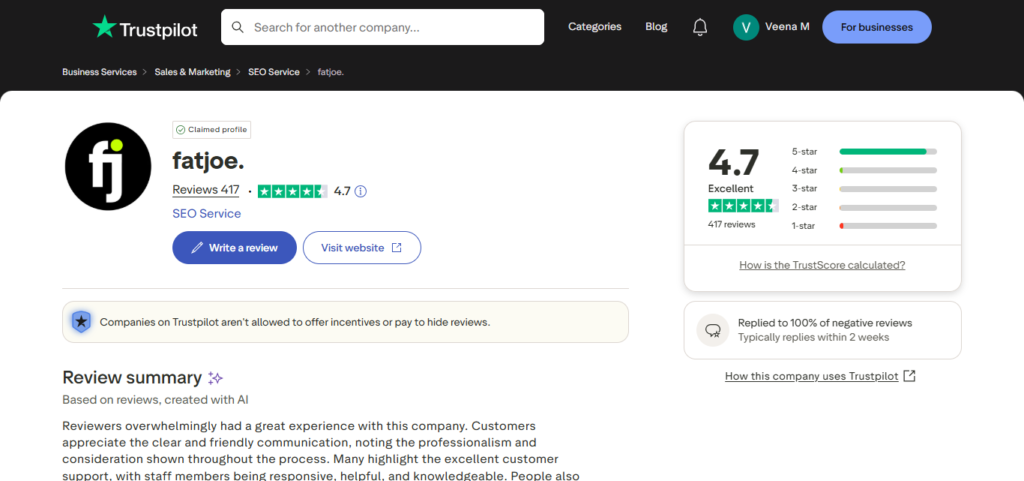
Trustpilot Rating: 4.7
FatJoe

FatJoe Grow package is designed as a simple and done-for-you link building solution where you choose a package and the team handles the rest. It is built mainly for agencies, resellers, and brands that want regular backlinks without managing outreach or strategy themselves.

Instead of customizing every campaign, the service follows a standard system where links are placed based on predefined ratios and best practices. This makes it easier to scale link building across multiple projects.

Package and Pricing:

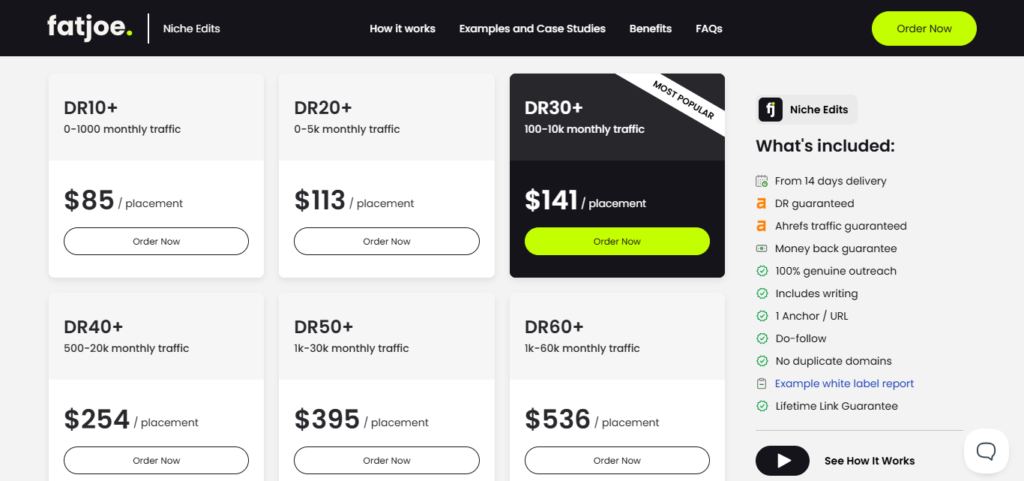
FatJoe offers fixed packages based on the number and type of backlinks:

  • Basic – $685 (5 backlinks)
  • Pro – $1370 (10 backlinks)
  • Pro AI – $2055 (10 backlinks + mentions)
  • Ultimate – $4110 (15 backlinks)
  • Ultimate AI – $5480 (15 backlinks + mentions)
  • Cost per link: Approx $130 to $275 depending on the package
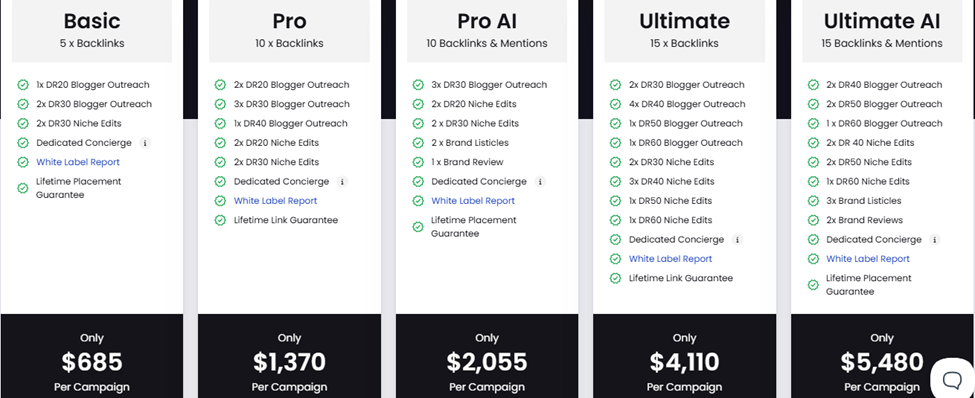
FatJoe - Pricing

What the Package Includes:

  • 5 to 15 backlinks per campaign
  • Mix of blogger outreach and niche edits
  • DR 20 to DR 60+ placements depending on plan
  • Pre-defined anchor text and URL distribution
  • Dedicated account concierge for order handling
  • White label reporting for agencies
  • Lifetime link placement guarantee
  • Delivery timeline of around 14 to 28 days

Pros

Cons

       Easy to order and scale across multiple campaigns

      Limited control over link selection

       Suitable for agencies and resellers

       Not fully customized strategy

       Built-in best practice anchor and URL ratios

       Lower DR links in basic plans

       White label reports for client work

       Lifetime link guarantee

Is FatJoe worth the price?

FatJoe is a practical choice for agencies and businesses that want a simple and repeatable link building process. It works well when you need consistent backlinks without spending time on outreach or planning. However, it is better suited for scale and convenience rather than highly targeted or niche-specific link building.

5. LinkBuilder.io

Best link building packages for premium and high-end campaigns

Clutch Rating: 5/5
LinkBuilder

LinkBuilder.io is a link building agency that offers fully managed monthly packages focused on high-authority backlinks and long-term SEO growth. Instead of offering basic link bundles, it provides a strategy-driven service where research, outreach, and placements are handled as part of a complete campaign. In several case studies, clients have seen traffic growth of over 100%. The links offered by this agency not only helps with Google search visibility but also in AI search visibility.

Package and Pricing:

LinkBuilder.io offers monthly packages based on link volume and campaign scale:

  • Startup – $2999/month (8 backlinks)
  • Pro – $5999/month (16+ backlinks)
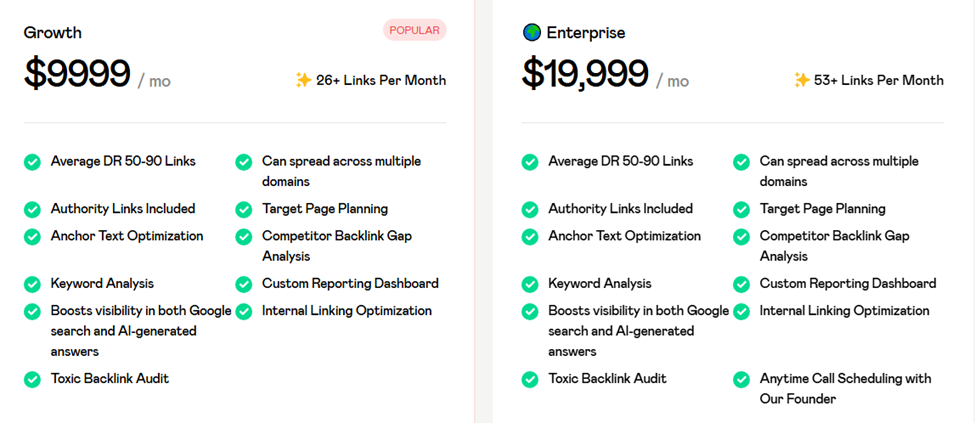
  • Growth – $9999/month (26+ backlinks)
  • Enterprise – $19,999/month (53+ backlinks)
  • Cost per link: Approx $250 to $375 per backlink depending on the plan
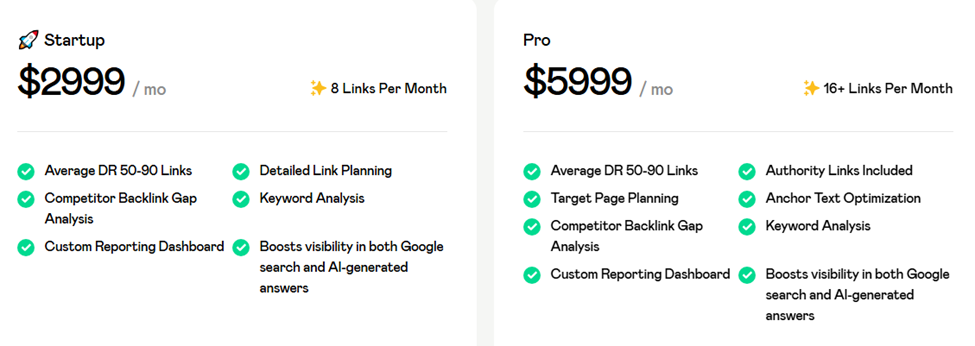
LinkBuilder.io - Pricing

LinkBuilder.io - Pricing

What the Package Includes:

  • 8 to 50+ backlinks per month depending on the plan
  • Placements on websites with DR 50 to 90+
  • Target page planning and keyword analysis
  • Competitor backlink gap analysis
  • Anchor text optimization
  • Custom reporting dashboard
  • Internal linking and backlink audits in higher plans
  • Strategy-driven outreach and placements

Pros

Cons

       High-authority backlinks (DR 50+)

       Very expensive for small businesses

       Offers SEO blog writing services

       Not suitable for low budgets

       Many other add-on services are available

       Requires long-term commitment

       Detailed reporting and analysis

       Limited flexibility for quick orders

       Suitable for scaling large campaigns

Is LinkBuilder.io worth the price?

LinkBuilder.io works well for businesses that want someone else to handle link building from start to finish. The focus is not just on getting links, but on improving rankings for specific pages and keywords. The pricing is high, but it suits companies that want good progress and clear direction instead of random link placements or one-time campaigns.

How to choose the best link building packages?

Most link building packages look similar, but pricing can vary a lot. You might see 20 links for $1000 and 5 links for the same price. The difference usually comes down to link quality and how the links are built. If you don’t check properly, you can easily overpay or end up with low-quality links.

What to check before buying a link building package:

  • Check real websites, not just metrics: Ask for sample sites. A DR 60 site with no traffic or spammy content has little value. Open the site and check if it looks real and active.
  • Calculate cost per link properly: Divide total price by number of links. If you are paying $1000 for 20 links, that is $50 per link, which usually means low quality.
  • Look at traffic, not just DR or DA: A good backlink should come from a site with real traffic, ideally 1K to 10K+ monthly visitors at minimum.
  • Ask where your link will be placed: Links inside real content perform better than author bio or sidebar links. Always confirm placement type.
  • Check if you can approve websites: Good providers let you review sites before placement. If not, you have no control over quality.
  • Understand anchor text usage: Too many exact match keywords can harm your site. Ask how they balance brand, partial, and natural anchors.
  • Ask about link permanence: Some links get removed after a few months. Confirm if links are permanent or have a replacement guarantee.
  • Check delivery timeline vs promises: Getting 50 links in 5 days is a red flag. Good links usually take time because they involve real outreach.
  • Avoid packages focused only on numbers: 50 cheap links rarely outperform 5 strong links. Focus on impact, not volume.

What to avoid when buying link building packages?

Many link building packages look attractive at first, but a few common signs can indicate poor quality or unnecessary risk. Here are the red flags to avoid:

  • Very low pricing: Packages offering links at $20 to $50 each usually come from weak or spammy sites. These links rarely help rankings and can sometimes harm your site.
  • No sample websites shared: If a provider does not show example sites before purchase, you have no idea where your links will go. This is a major risk.
  • Guaranteed rankings or results: No agency can promise rankings because SEO depends on many factors. Such claims are often used to attract buyers, not reflect real outcomes.

Wrapping up

There is no single link building package that works for everyone. The right choice depends on your budget and the type of links your website needs. Focus on getting links from relevant and trustworthy websites instead of chasing higher numbers. Always check what is included and how the links are built before making a decision. If you are looking for the best link building packages, choose providers like Linksman that let you select websites and link types before placing an order. It is also a good idea to start with one link and review the results before committing to a full package.

FAQs About Link Building Packages

1. Should I pay per link or choose a link building package?

If you are testing a provider, start with a single link to check quality. Packages make more sense when you want consistent link building over time. They usually offer better pricing per link and save time compared to buying links one by one.

2. How much do the best link building packages cost?

Most link building packages cost between $1000 and $5000 per month. Premium services can go much higher depending on link quality and strategy. On average, a good backlink costs around $100 to $300, while high-authority links can cost $300+.

3. How many backlinks should I expect in a package?

It depends on pricing and quality. Lower-cost packages may offer 20 to 50 links, while high-quality campaigns usually include 5 to 15 links per month. Fewer but stronger links often have better impact.

4. Are cheaper link building packages worth it?

Low-cost packages often include links from weak or irrelevant websites. These links may not improve rankings and can sometimes harm your site. It is better to focus on fewer and higher-quality links.

5. Why should I buy link building packages instead of individual links?

Packages are easier to manage and often come with bundled pricing, which reduces the average cost per link. They also offer a steady flow of backlinks, which is better for SEO compared to random one-time links.

6. Can link building packages guarantee rankings?

No. No agency can guarantee rankings because SEO depends on many factors like content, competition, and website health. Good packages can improve your chances, but they cannot promise exact results.

7. Are link building packages safe for SEO?

They are safe if the links come from relevant websites and use natural anchor text. Avoid providers that use spammy sites or build links too quickly.

8. What is the biggest mistake people make when buying link building packages?

Focusing only on price and number of links. Many buyers choose cheaper packages with more links, but these often have little impact. Quality and relevance matter much more.
Share this topic on

Elevate your SEO with
LinksMan!

Quality guest post services and more to boost your Website’s Authority

Related Articles
Backlink Types

A Complete Guide to Backlink Types: Safe, Risky, and Harmful Links

Backlinks are one of the most essential and powerful signals that Google uses to rank any website. There is a study to back this.

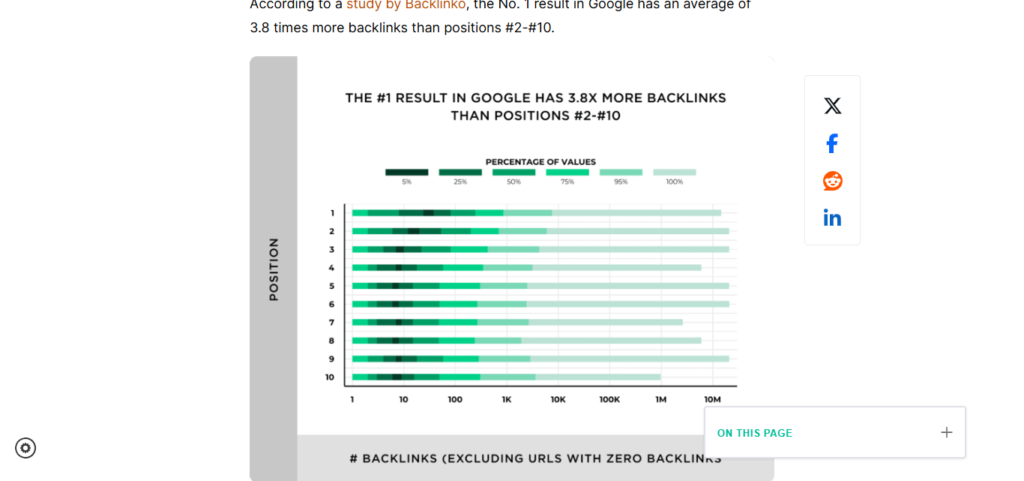
According to a Backlinko study, a webpage that ranks 1st on Google has an average of 3.8x more backlinks than webpages that pages that rank No.2 to No.10.

These backlinks serve as a trust signal, a recommendation, or, in essence, a vote of confidence.

It tells search engines,” your website is credible, valuable, and is worth checking out.” The more quality backlinks your website has, the more likely it is to rank higher in SERPs.

Simply put, backlinks are the main reason why some webpages get more traffic than others.

Undoubtedly, backlinks are important, but not all backlinks are good. Some backlinks help you rank higher, while some do nothing, and some backlinks can even hurt your website ranking in the long run. Therefore, it is essential to understand the types of backlinks and on which one you should focus – safe, grey-hat, or harmful. If you build backlinks without understanding it, you could waste your valuable time, money, and invite Google penalties.

In this blog, you will learn about the types of backlinks (safe, risky, and harmful). It will help you build the backlinks that help you rank higher in Google’s search results pages.

So, without further ado, let’s get started.

What are Backlinks?

Backlinks are links that your website gets from other websites. They are called backlinks because they “link back” to your site. Backlinks are also known as incoming or outbound links. It plays a major role in a website’s E-E-A-T (Experience, Expertise, Authoritativeness, and Trustworthiness), which is a key factor in how Google analyze content.

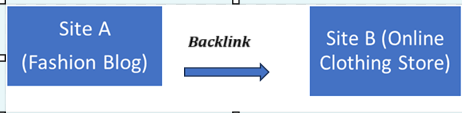
For example, if you run an online clothing store (Site B) and a popular fashion blog (Site A) links to one of your pages, that link becomes the backlink for your website. It not only brings more prospects to your store but also tells search engines that your website is credible and reputable.

Here, if website A links -> website B, it means website B has earned a backlink from Website A.

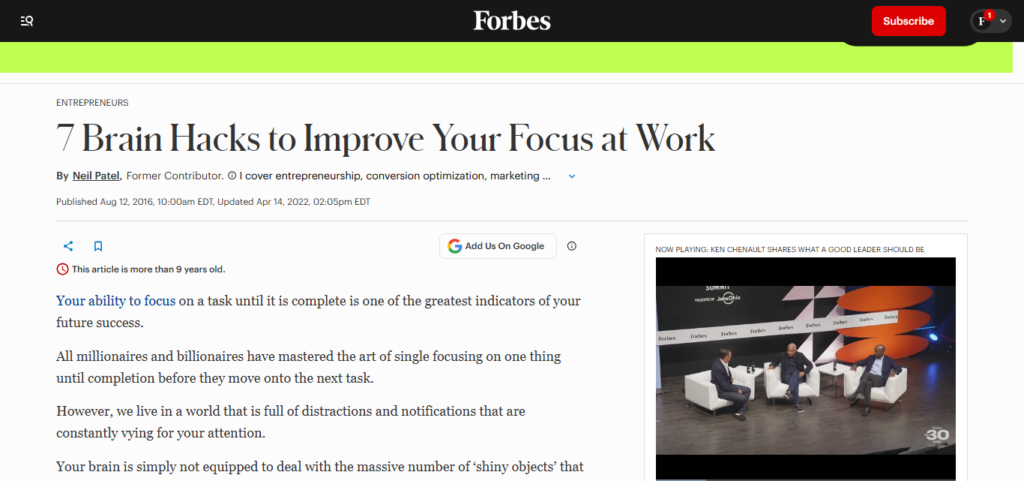
Backlinks help search engines understand that your website is useful or trustworthy. If trusted websites like Forbes.com are linking to your site, it means your content has value. That’s why Google treat them as a trust signal.

What Makes a Backlink Valuable?

A high-quality backlink will boost your ranking more than many low-quality backlinks. According to John Muller, the quantity of backlinks does not matter, but the quality of backlinks makes all the difference. He said this on Google SEO Office Hours.

Simply put, not all backlinks are equal; some can boost your website’s SEO while others may actually harm your rankings or reputation.

The following criteria define a high-quality backlink.

  • Relevance of linking page – Your website should get backlinks from sites that are related to your topic or industry. If you run a lifestyle blog, a link from the credible clothing brand website is more useful than one from any random tech directory.
  • Domain authority – A backlink from a website with strong authority, like Forbes.com or HubSpot.com, is more beneficial than a low-traffic website.
  • Anchor text quality – Anchor text is the text that users click to visit the link. Backlinks with a relevant keyword or a clear description about the linked page’s topic help Google understand the context and relevancy of the link better.
  • Placement in content – Where the backlink appears also matters. If the link is present in the middle of the blog post is more valuable than the one that is placed in a sidebar or footer. Context is also important. The backlink should be embedded naturally within the main content of the blog post. If it is placed in the sidebar, footer, or author bio, it is not that valuable. If the link is paid or placed out of context, it can harm your website’s rank.
  • Link Diversity – Your backlink profile should include links from different websites and platforms instead of relying solely on a few dominant sources. It signals search engines that your website is relevant, trustworthy, and popular.

Bonus Read: 5 Best Link Building Marketplaces in 2026 | Safe & Trusted

Types of Backlinks by HTML Attributes

If you want to grow your website, it is important to understand the different types of backlinks. Some types of backlinks pass authority while others are just for reference. Knowing types of backlinks helps you understand how Google sees your content and helps you build a stronger backlink profile. Before understanding its types, let us first understand what rel attributes are.

What are rel attributes?

The rel attribute, when applied to the <a> element it provides information to the search engine regarding the nature of the link, how they interpreted and passes ranking signals. Google also use these attributes for crawling and indexing purposes.

Here are four main types of backlinks.

1. Dofollow backlinks

They are the most valuable for SEO. These types of links pass authority (link juice) from the linking page to yours. If your website has more quality backlinks, your content will rank higher. All links are by default dofollow.

For example,

<a href = https://jeenaminfotech.com/> Trusted Link-Building Agency </a>

2. Nofollow backlinks

Nofollow backlinks tell search engines not to pass any authority to the linked page. Such links do not directly boost ranking, but they can still drive traffic and help you build brand visibility. These are useful when you don’t want to endorse any untrusted sites or affiliate links.

For example,

<a href = https://jeenaminfotech.com/ rel=”nofollow”> Read this </a>

3. Sponsored backlinks

Sponsored backlinks are also known as paid links. It indicates that the person inserting sponsored backlinks may get paid for doing it. Google considered them spammy. If you don’t tag sponsored links properly, it can be the reason for Google penalties or a drop in ranking.

For example,

<a href = https://jeenaminfotech.com/ rel=”sponsered”> Visit our website </a>

4. UGC backlinks

UGC backlinks usually come from user-generated content like forums, blog comments, or community discussions. It should be tagged properly to inform the search engine that the content was not published by the website owner.

<a href = https://jeenaminfotech.com/ rel=”ugc”> Read my blog </a>

 UGC links don’t pass much authority, but they can be useful for driving referral traffic or brand discovery when used naturally. 

Types of Backlinks (Based on How They’re Built and Where They Come From)

Not all backlinks are useful. Some can boost traffic significantly, while others can harm your website, and others do nothing. Here we have grouped them into three different categories – the good, the neutral, and the bad.

A. Safe Backlinks (White-Hat)

Backlinks that follow Google’s guidelines and are genuinely earned are safe backlinks. They help you boost your website’s authority over time and positively impact your SEO performance.

1. Guest Posts on Relevant Blogs

Guest post backlinks, you generally get by writing blogs or articles for other websites in your industry. You can provide valuable content to their audience, and in return, you get one or two links back to your own site. It helps you reach a new audience and build authority in your niche. 

For instance, if you are a digital marketing agency and create a blog post on digital marketing, linking it to your landing page, it’s considered a guest post link. Usually, guest post backlinks appear in the author bio or naturally within the post. To maximize your benefits, always choose websites with good authority and real traffic. Your guest post content should be clear, concise, useful, and not overly promotional.

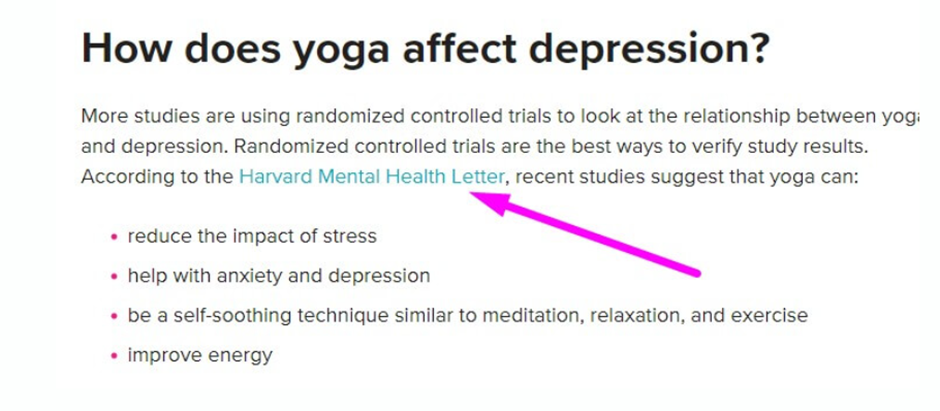
2. Editorial Links from Content

Whenever other websites find your content useful and valuable, they naturally add links to your website. You don’t ask them to do it, but they do it because your content genuinely offers something valuable, which is worth referencing. These are the best backlinks that you can get.

Usually, editorial backlinks come from blogs, news sites, or other industry resources. If you publish original research or unique insights that others want to cite, you can increase your chance of earning editorial links.

Image Source: Link

3. Contextual Links Within Body Copy

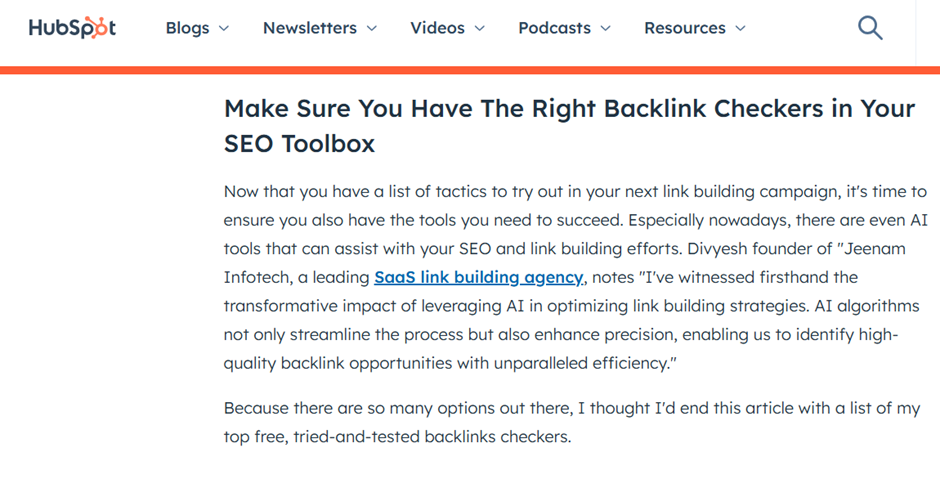
Contextual links are placed into existing content on another website. In this, you don’t write new content, but you reach out and request that they add your link to their webpage. It is also known as link insertions.

For example, if there is a good blog post on link building and your tool fits into that topic, you can ask the author to add your link. It will help you quickly get relevant links from the aged content.

Image Source: Link

Here, HubSpot has linked Jeenam Infotech contextually, which can drive massive traffic for them.

4. HARO and Expert Interviews

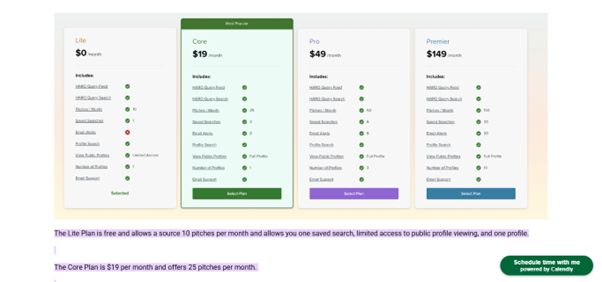
The full form of HARO is Help a Reporter Out. It is the platform where journalists ask for expert input. If you have in-depth expertise on that topic and your answer gets published there, it usually gives you a backlink. These links come from high-authority websites or blogs.

For example, a digital marketing journalist might ask for marketing tips. If you give them a solid answer and they use it, your name and website link might be included. Such link efforts take time, but they bring serious SEO value. You don’t need to be an expert to start; all you need to offer is value and be consistent in that.

5. Webinar Links

Do you often host or speak in a webinar? If yes, it’s a great opportunity for you to earn a backlink. These webinars are usually promoted on other websites, and they include a backlink to your site. These webinar links bring you in front of the right audience. As webinar links are based on expertise and engagement, if you want to make the most out of it, collaborate with well-known names in your field and share the event on social media platforms or community pages.  

Image Source: Link

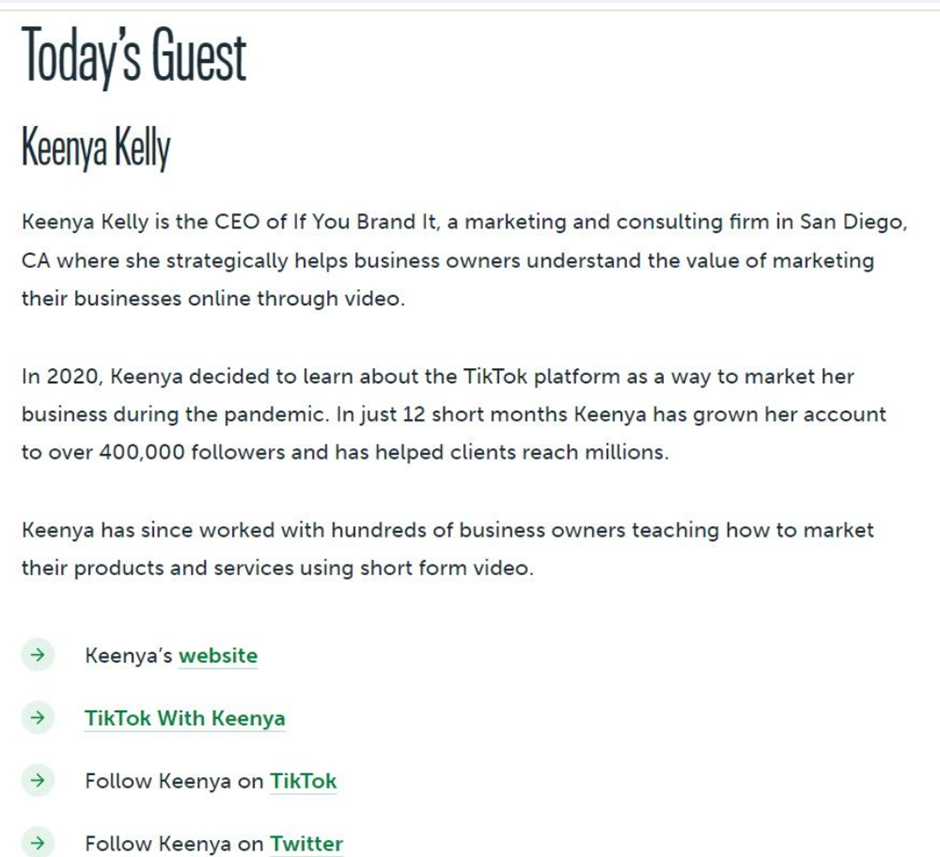
6. Podcast Links

If you become a guest on the podcast, you can earn a backlink in the guest profile or show notes. These backlinks are valuable and tied to your personal or brand authority.

If that podcast ranks well and has loyal listeners, backlinks can be very beneficial. Therefore, to get featured, you can pitch yourself with a strong, relevant topic or story. Be helpful as it will help you build backlinks and audience trust.

Image Source: Link

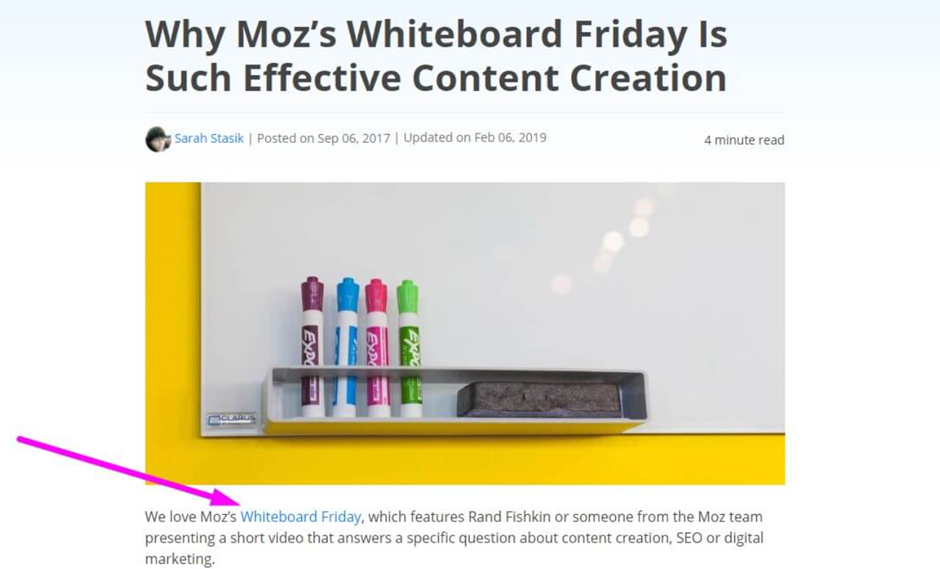
7. Resource Pages

Some websites list useful resources on specific topics on their website. If your content is strong, like a tool, checklist, or guide, you can request that they add yours to their website. These kinds of backlinks are powerful when placed on the well-established blogs, .edu sites, etc.

All you need to focus on here is to offer value. If your content is unique, you can contact the site owner and explain why your link should be added here. The request should be respectable tone and in simple form.

Image Source: Link

B. Neutral or Risky Backlinks (Grey-Hat)

Grey-Hat backlinks are those types that do not carry much SEO value or harmful. Google usually ignore them. If grey-hat backlinks are used properly, they can bring real traffic, brand exposure, and link diversity. Here are some most common types of grey-hat links.

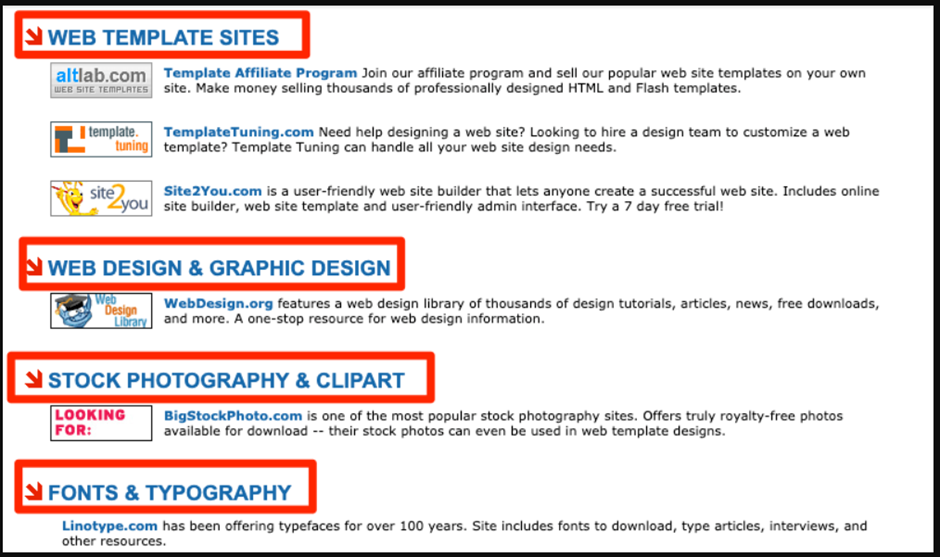
1. Directory Submissions

Directory backlinks usually come from online directories such as Google, Yelp, Tripadvisor, etc.

For example, Tripadvisor listing this Italian restaurant II Ristoro includes a backlink to its website. 

This type of link does not boost your SEO like editorial backlinks do. However, they can provide you with valuable referral traffic by improving local SEO results. You need to avoid outdated and spammy directories and choose the known, used by your target audience, and drive your real traffic.

2. Press Releases

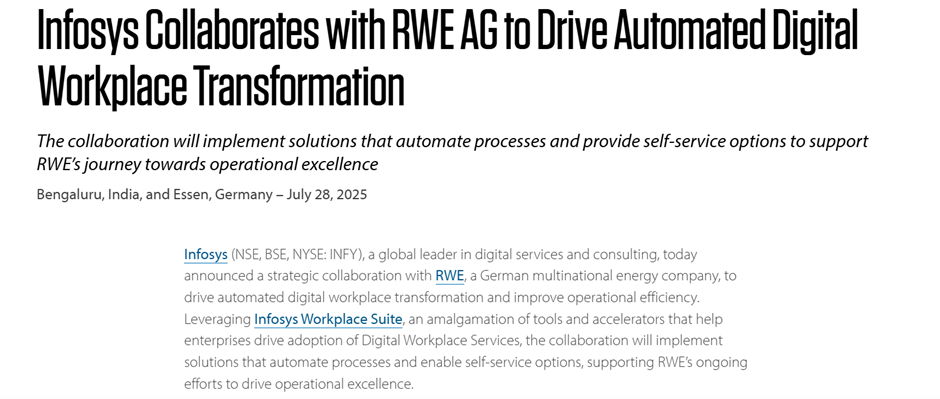
Whenever you publish a press release and distribute it via newswire platforms, you may get backlinks from media sites. These links are nofollow and don’t boost your SEO efforts much. However, press releases can bring brand awareness and bring you referral traffic.

You must use it whenever you have something real and valuable to share. Choose high-quality PR sites or pitch your story to a known journalist in your industry.

For example, here Infosys has mentioned that they collaborate with RWE, which is a German multinational energy company, by linking their website.  

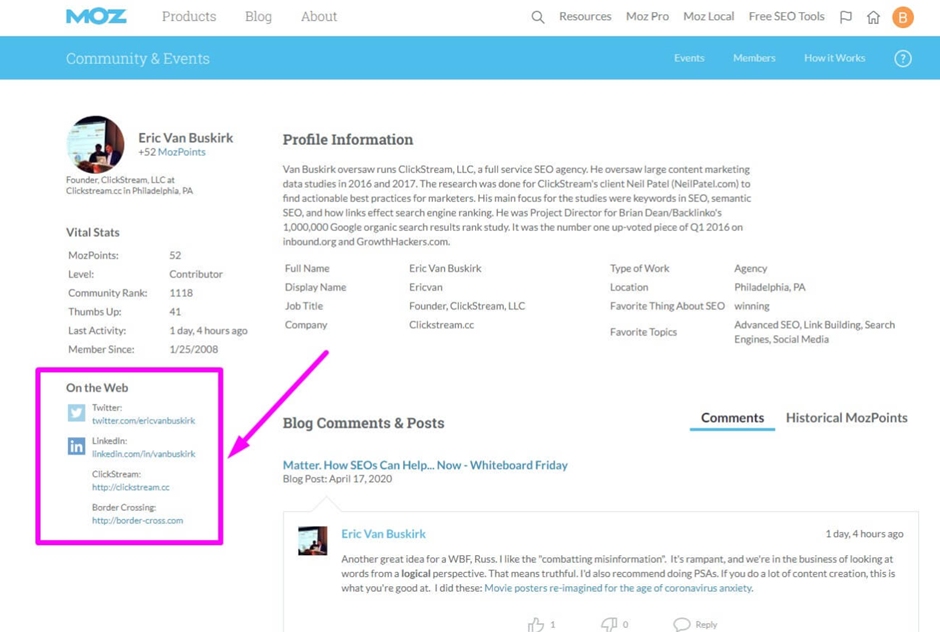
3. Comment Backlinks

Whenever you leave a reply on the blog post, forum, or social media and include your website URL, it is a comment backlink. This backlink is nofollow by default, so it does not directly boost your SEO efforts. However, they can drive referral traffic. Only include links in comments if you provide helpful information that users are likely to appreciate. Avoid generic comments like great post.

When you comment on high-quality blogs or niche-relevant sites, it helps you stay visible in the community. 

Image Source: Link

Bonus Read: Best Link Building Services: How to Find Trusted Providers for Your Business

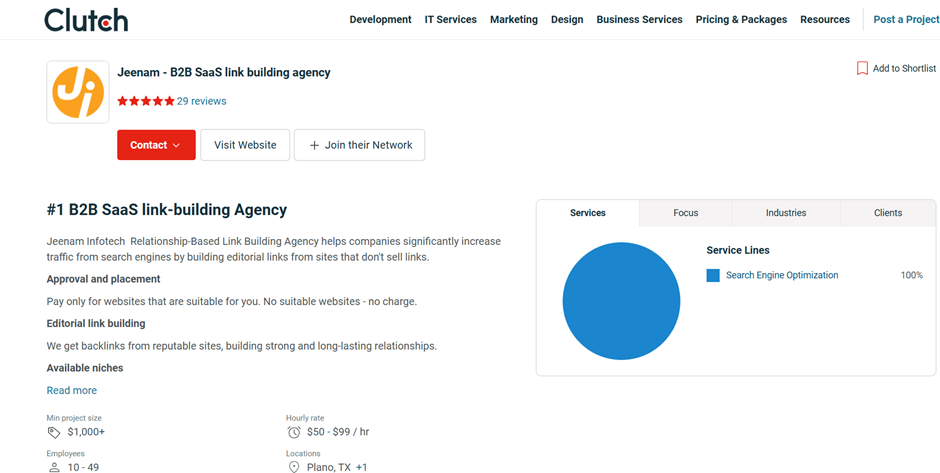
4. Business Profile Links

Whenever you create a profile on platforms like Google Business, Yelp, Clutch, or industry directories, you get a link to your website. It is called the business profile link. They are useful in improving local SEO efforts. These links are nofollow, but still add credibility. Ensure you have uploaded consistent details on all platforms because inconsistent details can confuse Google. 

Image Source: Link

5. Social Media Links

These are links from your social media profile pages, like LinkedIn, Twitter, Instagram, or YouTube or author bios. These are nofollows but help in improving branding and trust, and drive traffic.

Quick Comparison: Low Risk Vs High Risk Grey-Hat Links

Backlink Type Low Risk/Safe High Risk
Directory Submission Safe to use when submitting to trusted, niche-relevant, high-traffic directories like Yelp When you submit to outdated, low-quality, or irrelevant directories.
Press Releases When it is issued for actual news/events, and published on the authoritative PR platforms. Overuse of PR syndication for SEO with no real news value
Comment Backlinks Thoughtful and helpful comments on niche-relevant blogs or forums Generic or mass comments such as “Nice Post” with links to unrelated sites
Business Profile Links Creating a genuine business profile with accurate and consistent information across platforms Creating fake or duplicate solely to drop links
Social Media Links When linking from official brand accounts like bios, posts, and about sections Creating multiple fake profiles or spamming links in comments

C.    Harmful Backlinks (Black-Hat)

Some backlinks can damage your SEO. These links come from shortcuts or shady tactics that violate Google’s rules and are harmful backlinks. These backlinks aim to manipulate search rankings. So, it can hurt performance. Black-Hat backlinks can give you a temporary boost, but usually lead to penalties and, in some cases, even deindexing. You should avoid such types of backlinks if you want to improve your rankings. Here are a few examples of harmful backlinks.

1. Paid dofollow links

Buying backlinks seems tempting as it gives you a quick win. However, if the website is spammy, without real traffic, or exists only to sell links, Google can easily spot it. Such links can give you penalties, or your website ranking can drop. So, instead of paid links, invest in real content or PR.

2. Private Blog Networks and Link Farms

These are a network of websites, but they have only one purpose: to sell backlinks. They don’t have any real content, traffic, author, or purpose. Google can easily find it out. So, if your website is connected to a link farm or PBN, it can give you a manual penalty or even deindex your webpage completely. So, you should always avoid shortcuts like these.

3. Spammy Automated Tools

Some automated tools claim they can build backlinks automatically through blog posts or spinning content. Such tools create low-quality and unreadable articles with links stuffed inside. Google consider it as spam, so it won’t bring traffic and doesn’t build authority. Besides, it can damage reputation. Therefore, you should avoid any such tool or service that promises hundreds of links for cheap.

4. Forum Spam and Blog Spam

Forum spam and blog spam mean posting irrelevant or overly promotional content to increase the search traffic of the website. It is usually done by inserting links or text into comment sections, forums, or other UGC content areas on the website. As in you try to manipulate search engines, it can harm your website’s SEO performance. Therefore, only add backlinks in forums or comments, and include those that provide real value.

Link Building Strategies to Earn Quality Links

If you want to earn quality links, here are a few link-building strategies that you need to follow.

  1.     You should create useful linkable assets like guides, infographics, tools, and research.

You must focus on producing original, high-quality content that helps you get dofollow links from editorial publications.

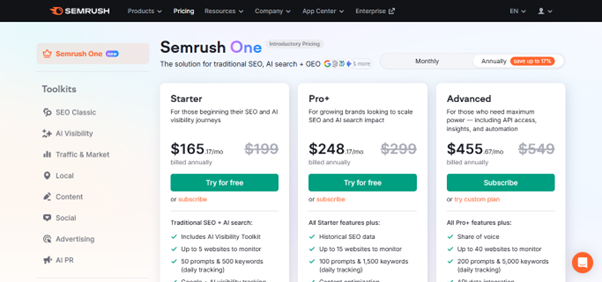
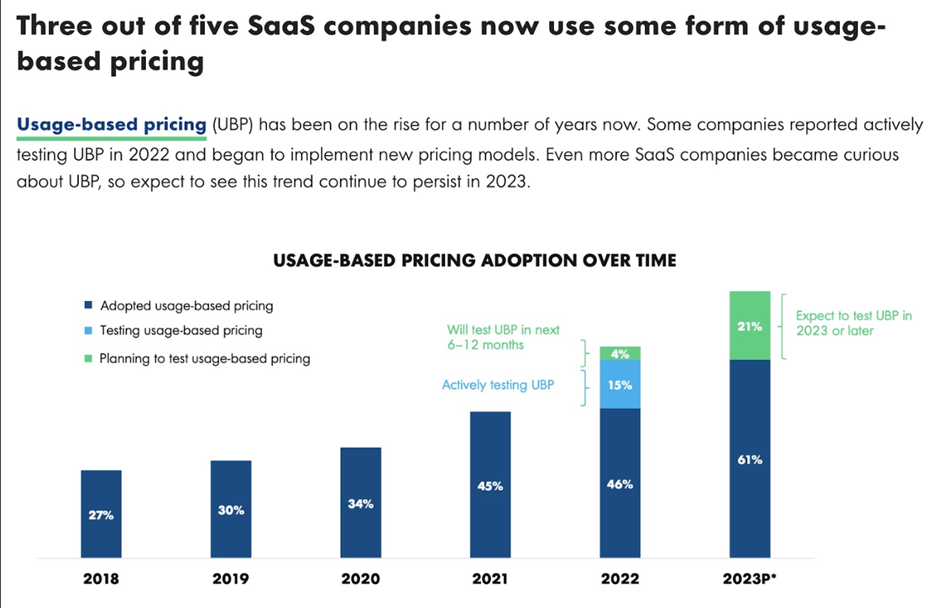
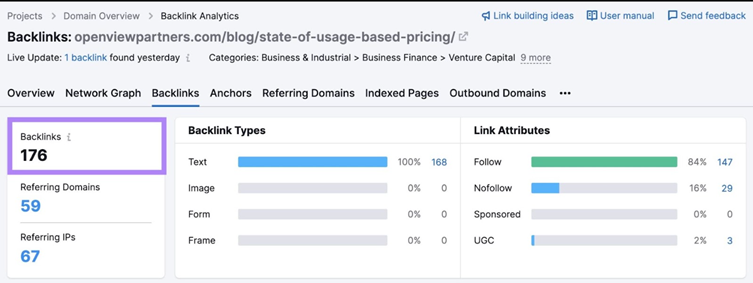
For example, you can take the example of OpenView Venture Partners. They have done a study on pricing, and as per Semrush, this study has earned 170+ backlinks since its publication, and 147 of them are dofollow. 

Image Source: Link

Image Source: Link

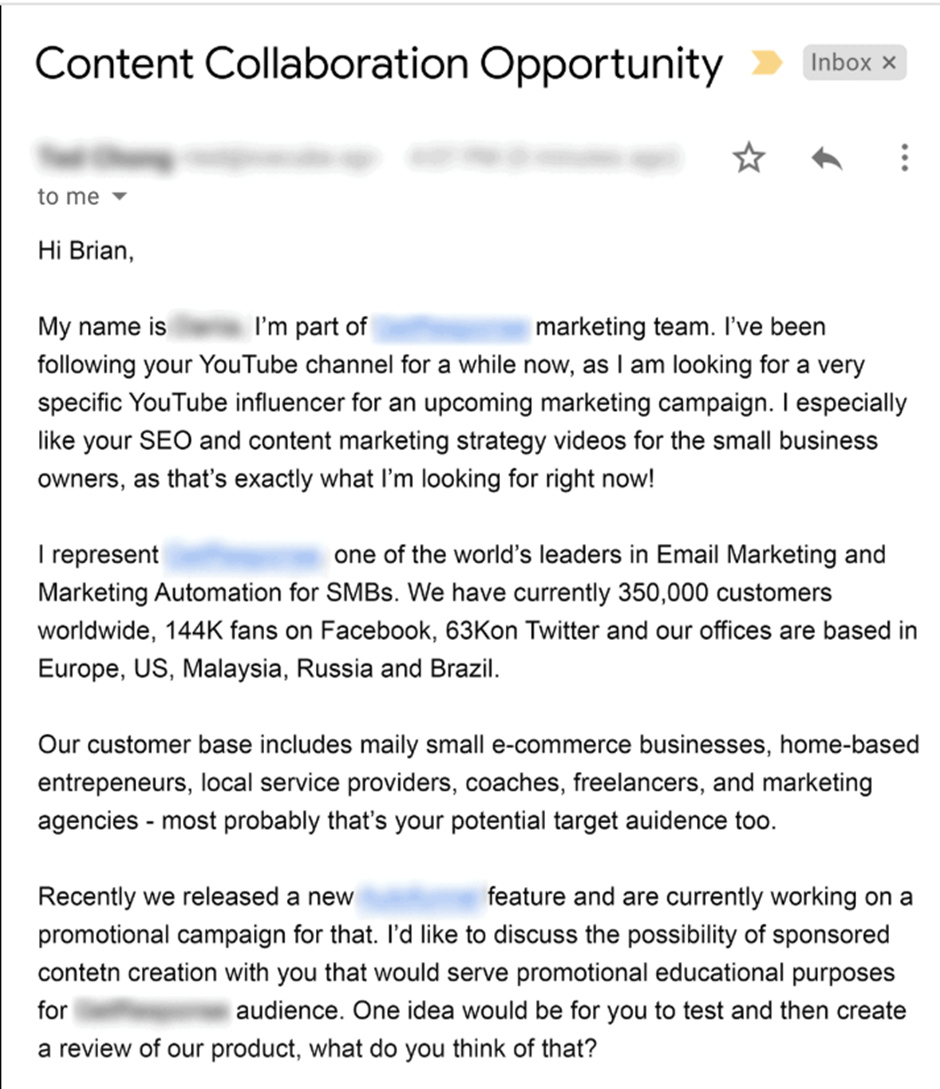
  1.     You can employ outreach strategies such as email, PR, and influencer collabs.

Email outreach, PR, and influencer collabs can help you earn quality backlinks. It will drive real traffic to your website and boost your SEO rankings. 

Image Source: Link

  1.     Build a relationship with industry blogs.

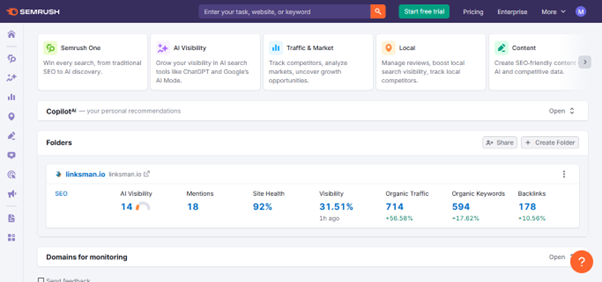
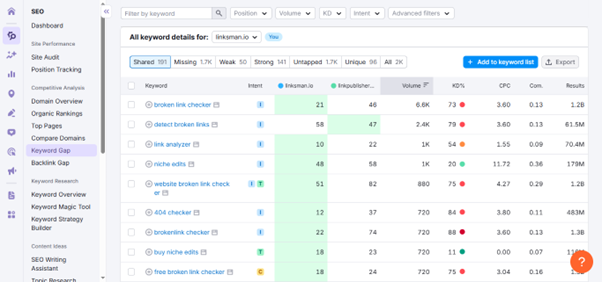
Try to know others in your industry who run authoritative websites. Engage on LinkedIn with them and give genuine, valuable comments on their blogs. It gives you an opportunity to earn a natural link opportunity. You can use link-building tools like Semrush or linksman.io to find high-authority websites in your niche and build relationships.

  1.     Repurpose content for backlinks.

From one long-form blog post, you can create infographics, reels, videos, convert them into a podcast, tutorial, and much more. Repurposing content can help you earn quality backlinks as it allows you to cater to the diverse content preferences of audiences.
 For example,

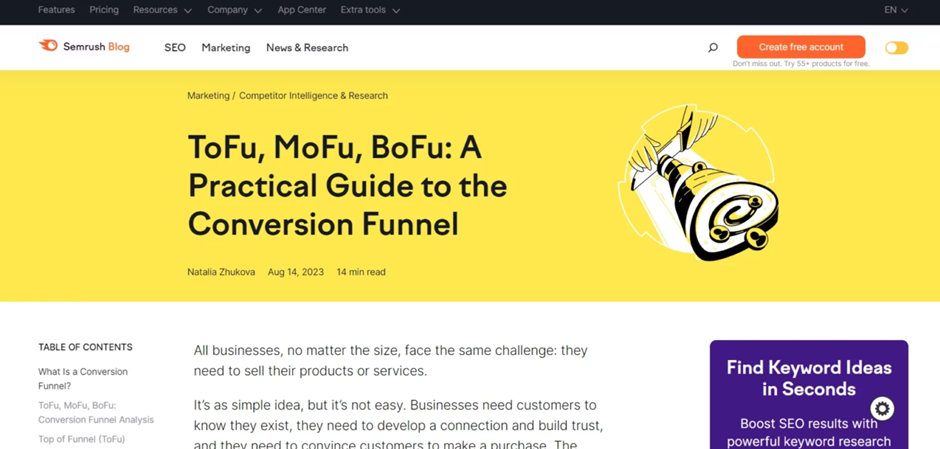
SEMrush is a master at effectively doing content repurposing. They published a high-quality blog post on the conversion funnel – ToFu, MoFu, and BoFu

Image Source: Link

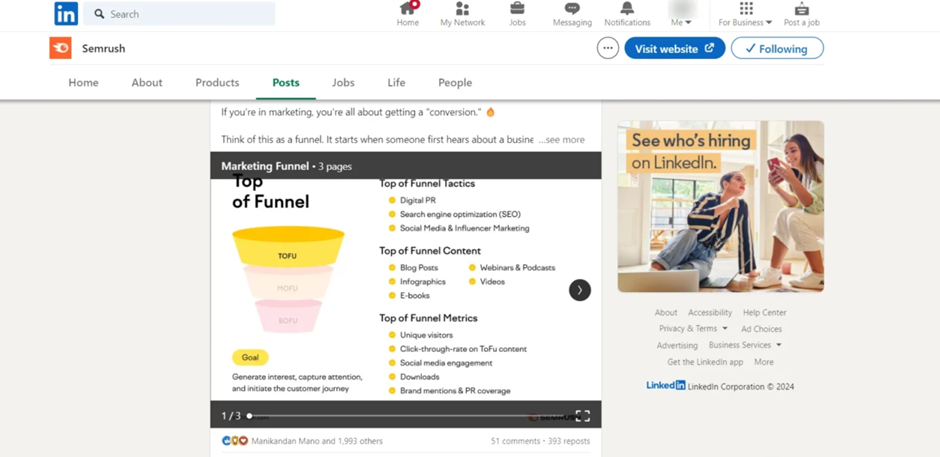
 Later, they repurpose it by creating a LinkedIn carousel post which includes all the key points from the blog.

Image Source: Link

How to Audit and Maintain a Healthy Backlink Profile

Once you’ve started building backlinks, start auditing and maintaining them. So, they help your website rank, find you new growth opportunities, and here is how to do it right.

  • You can use tools like Google Search Console, Ahrefs, SEMrush, etc., to check how many backlinks you currently have and which pages they point to.
  • Regularly monitor new and lost backlinks. If you lose any good backlinks, reach out to them and try to get them back.
  • If you find any toxic backlinks which can harm your website, use tools like SEMrush or Moz, identify them and disavow them if required.
  • Focus on which one is bringing traffic, guest posts, blogs, resource pages, etc, and double down your strategies on those.
  • Ensure your links are using natural and relevant anchor text and are placed in useful content. It affects how much SEO value they pass.
  • Focus on quality instead of quantity. Don’t try to build 200 links in 15 days and then stop. Google usually prefer steady and organic growth. So, keep publishing and tracking your progress month by month.

Epilogue – Types of Backlinks

Backlinks are valuable even after the recent Google algorithm updates. However, building the backlink that actually works takes time, effort, and a strategic and ethical approach. Hopefully, by reading this blog, you understood what is the difference between safe, risky, and harmful backlinks and which one you should choose. However, before we sign off, here are a few things that you should keep in mind while building your backlink strategy.

  •   Focus on quality instead of quantity.
  •   Always obtain links from reputable and relevant websites.
  •   Never chase automated or spammy backlinks.
  •   Avoid shortcuts, as they can harm your website’s credibility.
  •   If you notice any toxic link, clean it up immediately.
  •   Optimize your link-building strategy for long-term SEO success.
  •   To strengthen your backlink profile, regularly audit it. 

Do you need help auditing your backlink profile? Get in touch with us today!

FAQs

1. What are toxic backlinks?

Toxic backlinks are those that come from low-quality or spammy sites. If it is one or two, Google may ignore it, but if your website has too many toxic backlinks, it can harm your rankings and even trigger manual penalties. You must use tools to identify and disavow them if required.

2. Are nofollow backlinks valuable for SEO?

Yes, nofollow backlinks are valuable for SEO. They don’t directly boost search engine rankings like dofollow links. However, they can drive referral traffic, increase brand awareness, and help you build a more natural and diverse link profile.

3. How often should I check my backlink profile?

You should check your backlink profile at least once a month to ensure it is not harming your SEO efforts. The ideal frequency depends on the website’s size, industry, and link-building activity.

Small websites and blogs Every 1-2 months
Medium-sized businesses Every 2 to 4 weeks
Large websites and eCommerce websites Every week or bi-weekly
New websites Every three months
Established sites – low-competition niche Every 6 to 12 months
High competition industries Every 2 to 4 months

4. Are all paid links considered harmful?

Not all paid links are harmful, but many of them are. Buying or selling links to manipulate search ranking is against Google’s guidelines.
5. How do I disavow backlinks in Google Search Console?

If you want to disavow backlinks in Google Search Console, follow these steps.

  • Create a text file.
  • List the URLs or domains you want to disavow.
  • List URL in this format – domain:example.com

Upload this text file through the disavow links tool in Google Search Console for the specific property. Google will ignore these backlinks to your site.