
.Edu backlinks are among the most trusted types of links in SEO because they come from universities and educational institutions with strong domain authority. Data shows that many .edu sites have domain ratings of 70+, which is one reason Google values them a lot. Even a single backlink from these domains can increase your website credibility and make your backlink profile strong. However, securing links from educational sites is not easy and requires the right strategy. In this guide, we will share 12 proven free and paid strategies to help you earn quality .edu backlinks in an ethical way. You will also find a list of useful tools and resources to support the process.
.Edu backlinks – Key highlights
- .Edu domains are limited to accredited institutions and that’s why these backlinks are harder to obtain.
- EDU outreach campaigns often see response rates between 5% and 10%, meaning only a small percentage of outreach emails lead to backlink opportunities.
- Educational websites often maintain resource pages that link to external tools and student resources.
- Backlinks from .edu and .gov domains tend to stay active longer than most link types with a relatively low annual link loss rate of around 2% to 4%. (Moz)
- Getting backlinks from .edu sites can take up to 6 months because universities mostly require manual outreach and valuable content before adding external links.
- High-authority .edu backlink campaigns can cost between $2,000 and $10,000+ depending on outreach scale and university authority.
What are .edu backlinks?
The term “.edu backlinks” refers to hyperlinks that point to your website from a domain using the .edu extension, which is typically owned by universities and colleges. For example, a backlink from Harvard University’s website using the domain harvard.edu is considered an .edu backlink.
Other terms used for .edu backlinks include:
- Educational institution links
- University backlinks
- Academic backlinks
- Higher education links
12 proven ways to get .edu backlinks in 2026
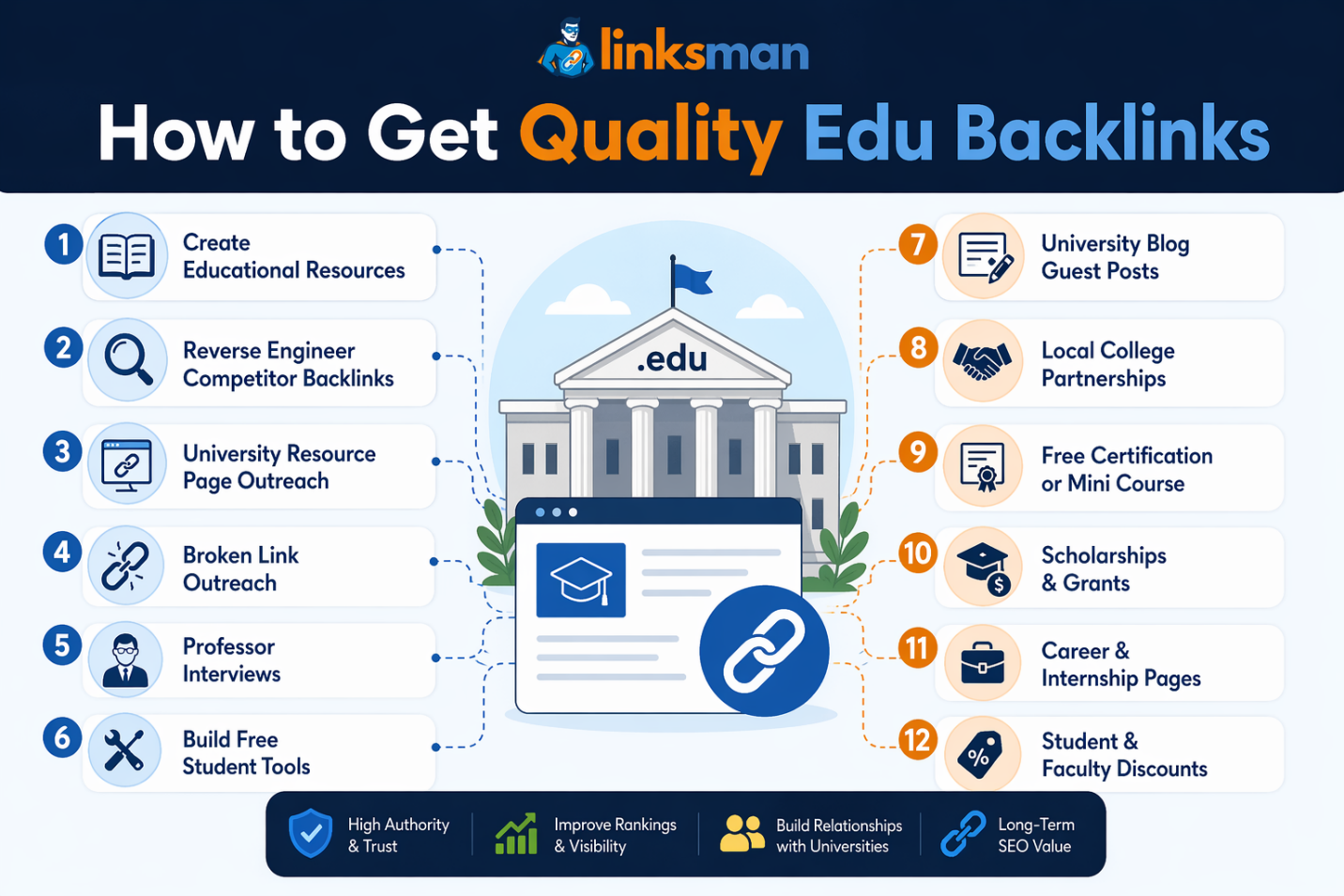
Getting .edu backlinks might seem difficult in the beginning, but with the right strategy and tools you can easily get quality edu links for your website. Below are 12 proven free and paid strategies you can use.
| Strategy Name | Difficulty | Time Required | Estimated Cost | Best For |
| Create Educational Resources | Medium | 4 to 12 weeks | $200 to $5,000+ | Websites with content teams |
| Reverse Engineer Competitor Backlinks | Easy to Medium | 1 to 3 months | $100 to $500 | Fast opportunity discovery |
| University Resource Page Outreach | Medium | 2 to 4 months | $100 to $5,000 | Existing guides or tools |
| Broken Link Outreach | Medium | 1 to 3 months | $100 to $600 | Content heavy websites |
| Professor Interviews | Medium | 1 to 3 months | $0 to $500 | Authority and niche expertise |
| Build Free Student Tools | Medium to Hard | 2 to 6 months | $300 to $5,000+ | SaaS, calculators, utilities |
| University Blog Guest Posts | Medium | 1 to 3 months | $200 to $2,000+ | Thought leadership |
| Local College Partnerships | Medium | 2 to 6 months | $2,000 to $10,000 | Local businesses |
| Free Certification or Mini Course | Medium to Hard | 2 to 4 months | $1,000 to $10,000 | Education and training brands |
| Scholarships & Grants | Medium | 2 to 6 months | $10,000 to $25,000+ | Large outreach campaigns |
| Career & Internship Pages | Medium to Hard | 3 to 6 months | $10,000 to $50,000 | Hiring companies |
| Student & Faculty Discounts | Easy to Medium | 1 to 2 months | $1,000 to $10,000 | SaaS, subscriptions, tools |
Create very helpful educational resources
Educational resources are helpful guides or documents that provide value to students and teachers as well as researchers. Universities often link to these resources on student help library pages or department resource sections when the content supports learning or career development.
According to multiple backlink studies – resource pages remain one of the most common sources of .edu backlinks because universities regularly maintain lists of trusted external references.
Examples of educational resources:
- Career guides
- Salary reports
- Study templates
- Industry statistics pages
- Research summaries
- Free learning materials
How to create educational resources that attract .edu links:
- Focus on topics connected to education or careers
- Create content that universities already reference on resource pages
- Publish data backed content such as statistics or industry trends
- Build downloadable assets like templates or PDF worksheets
- Create beginner guides that explain complex topics simply
- Add citations or sources to increase credibility
- Keep the page evergreen so universities can continue linking to it long term
- Outreach to department pages and student resource centers after publishing
Difficulty level – Medium
Time required – 4 to 12 weeks
Estimated cost – $200 to $5000+ depending on content depth and design quality
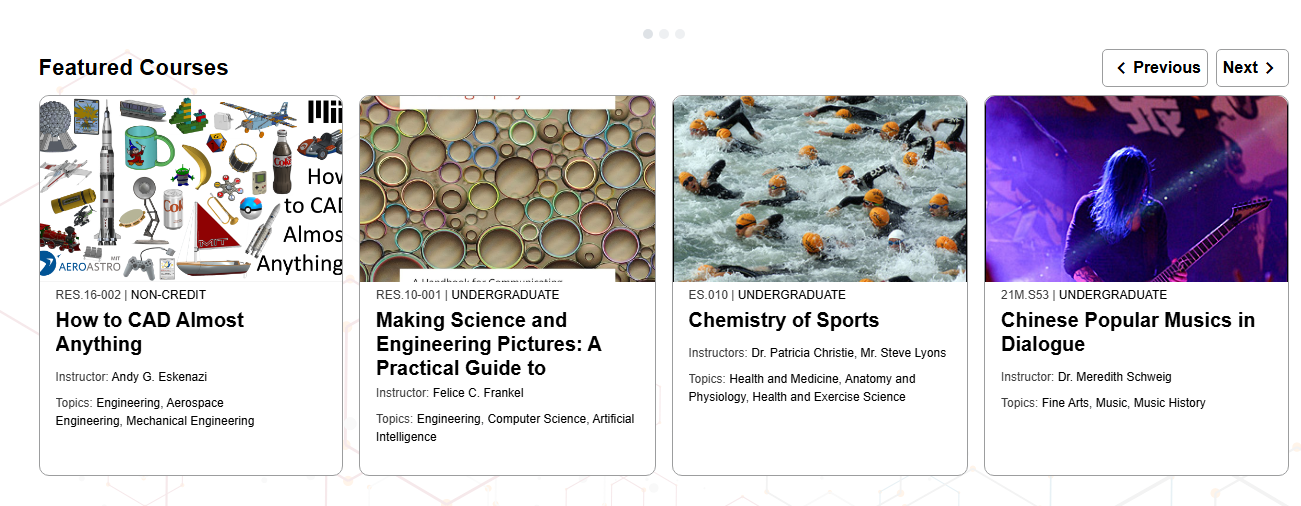
Here is an example of educational resource on MIT OpenCourseWare.
Reverse engineer competitor .edu backlinks
Most people use this method because it saves both time and money. Reverse engineering competitor .edu backlinks means analyzing where competing websites are getting educational links from and finding similar opportunities for your own website. Instead of searching for universities one by one, this strategy helps you find pages that already link to content in your niche. This method works well because universities usually follow linking patterns. If multiple competitors have links from the same college resource page, there is a good chance your content can also qualify for placement.
How to get edu backlinks using this method:
- Find 3 to 5 competitors ranking for your target keywords
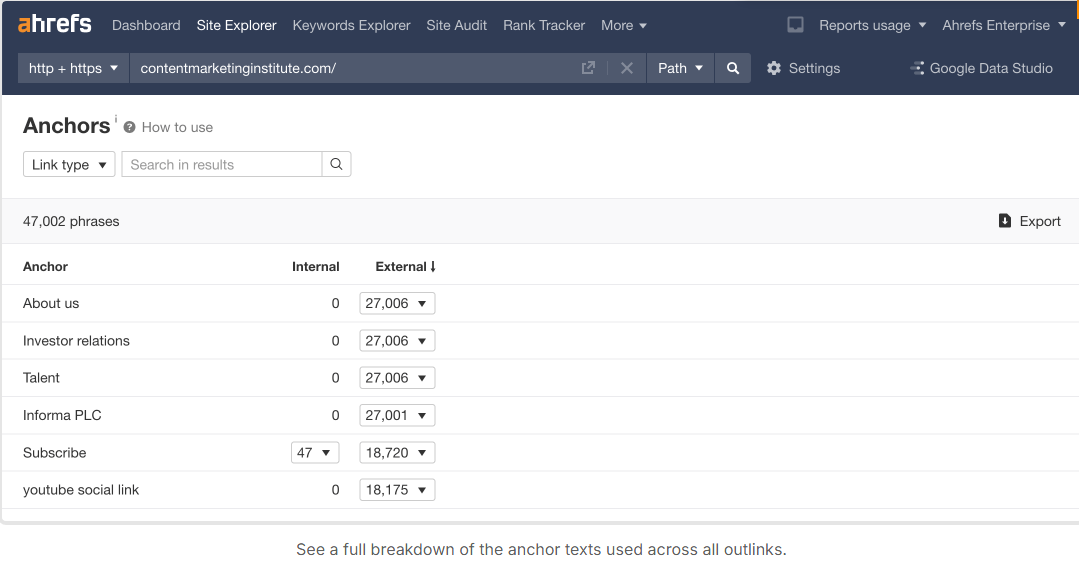
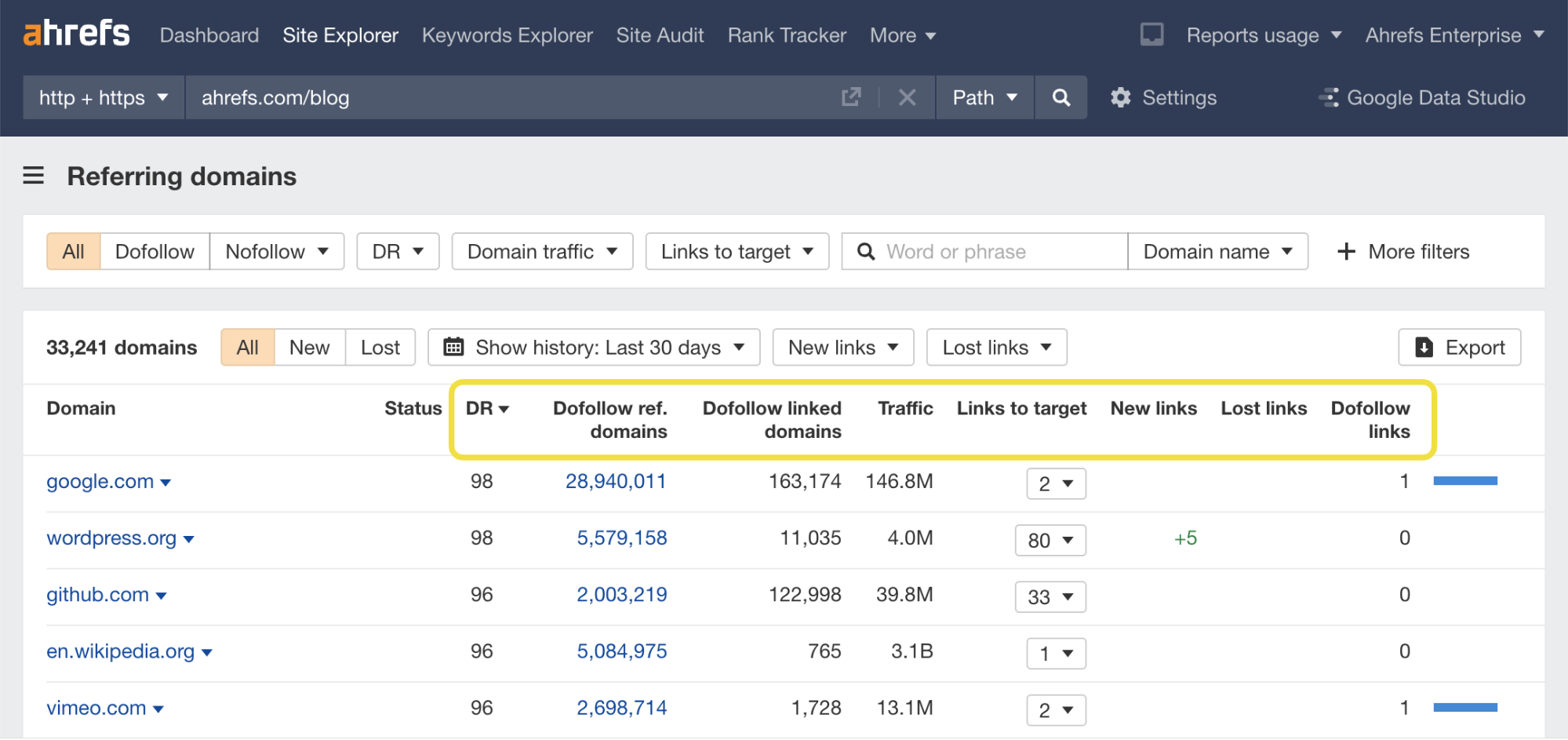
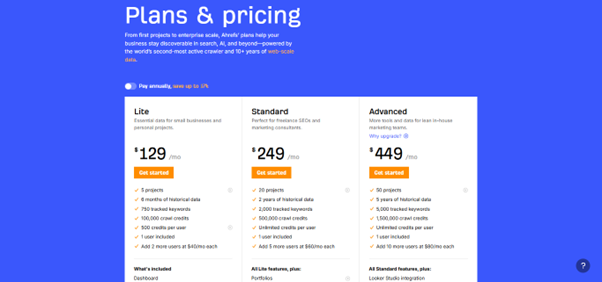
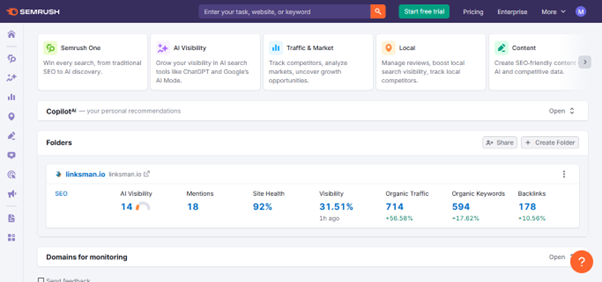
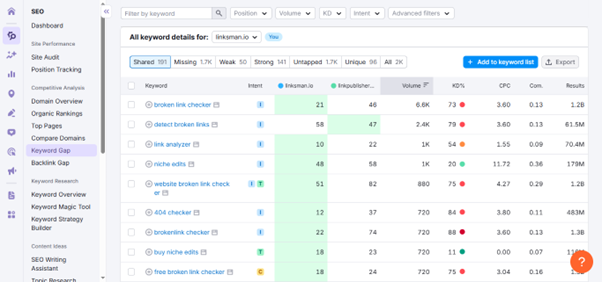
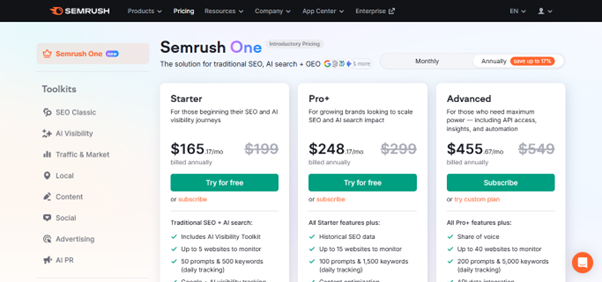
- Enter their domains into backlink tools like Ahrefs or SEMrush
- Filter backlinks by “.edu” domains
- Export the list of linking pages
- Identify repeated universities or departments linking to multiple competitors
- Study what type of content received the link
- Create a better or similar resource on your website
- Reach out to the university page owner with your content suggestion
What to look for in competitor EDU backlinks:
- Resource pages
- Career center links
- Scholarship pages
- Faculty blogs
- Student publications
- Research references
- Department resource pages
Difficulty level – Easy to medium
Time required – 1 to 3 months
Estimated cost – $100 to $500 for SEO tools and outreach software
Get featured on university resource pages
If you already have E-E-A-T content or other credible resources that can help students, you can use this method. University resource pages are sections on college or department websites that list helpful external links for students and faculty members. These pages often include career resources and learning tools as well as industry guides and helpful websites. This strategy works well because universities actively look for useful resources that support student learning or professional development.
How to get edu backlinks using this strategy:
- Create a helpful resource related to your niche
- Search for university resource pages using Google footprints
Use searches like:
site: .edu “resources” + keyword
site:. edu “helpful links” + niche
site: .edu “student resources” + topic
- Review the page to understand the type of links already included
- Find the page owner or department contact
- Send a short outreach email explaining how your resource helps students
- Follow up if you do not receive a response
Difficulty level – Medium
Time required – 2 to 4 months
Estimated cost – $100 to $5,000 depending on content creation and outreach
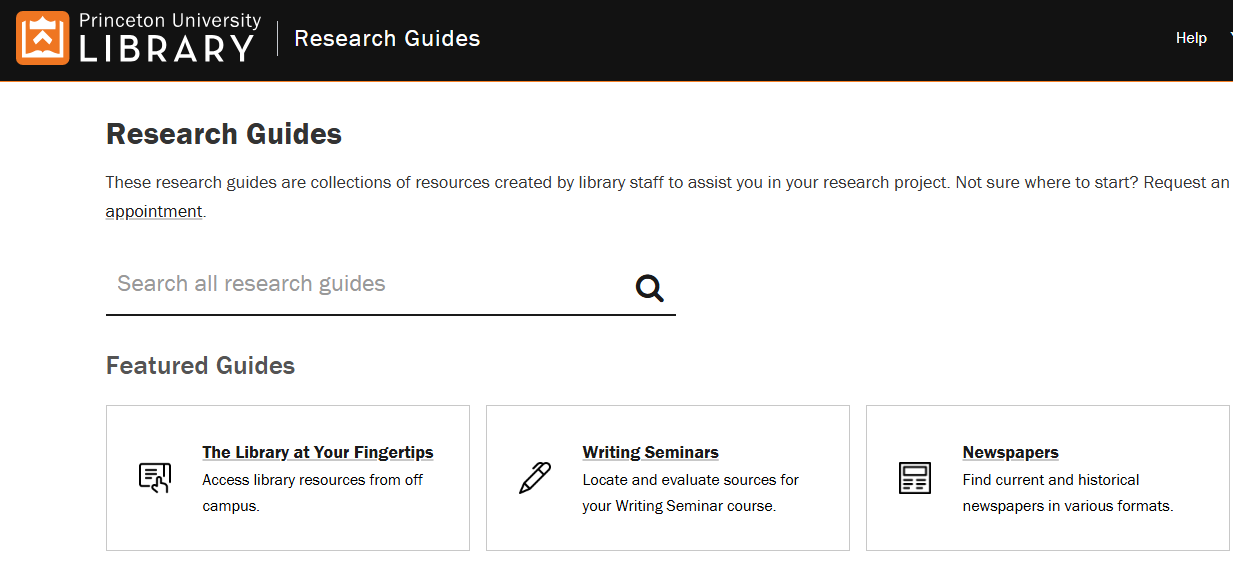
Here is an example of resource page from Princeton University.
Find and replace broken links on .edu sites
According to Ahrefs, educational and government websites often show a higher percentage of broken links, with studies estimating an average rate of 8% to 12% because many pages remain archived or outdated over time. Broken link building is a strategy where you find outdated or dead links on university websites and suggest your content as a replacement. This is a win-win strategy where replacing these broken links helps universities maintain their pages while giving you an opportunity to earn a relevant .edu backlink.
How to get edu backlinks with this technique:
- Search for university resource pages related to your niche
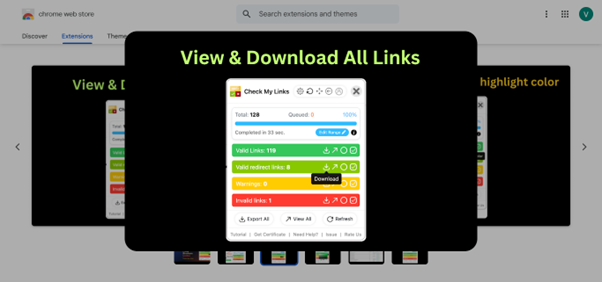
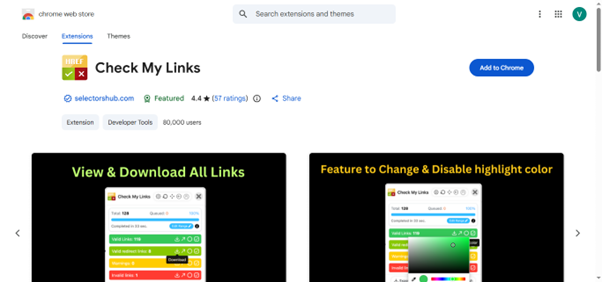
- Use tools like Ahrefs, Screaming Frog SEO Spider, or Check My Links to find broken links
- Filter pages that contain external resource links
- Identify broken pages relevant to your industry
- Create or update content matching the original topic
- Find the university page owner or webmaster
- Send a short email reporting the broken link
- Suggest your content as a replacement resource
- Follow up after a few days if needed
Difficulty level – Medium
Time required – 1 to 3 months
Estimated cost – $100 to $600 for SEO tools and outreach
Interview professors and faculty experts
Interviewing professors and faculty experts is a relationship based strategy where you feature academic professionals in your content and earn backlinks when they share or reference the interview. Universities often allow faculty members to publish interviews and media mentions on their profile pages or department websites. This creates an opportunity to gain relevant .edu backlinks while building authority around your topic.
How to get .edu backlinks using this strategy:
- Find professors related to your industry or niche
- Search faculty directories on university websites
- Reach out with a short interview request
- Ask questions related to research or career advice
- Publish the interview on your blog or resource page
- Include the professor’s bio and university profile link
- Notify them once the article is live
- Ask if they can share or reference it on their faculty page or department website
Difficulty level – Medium
Time required – 1 to 3 months
Estimated cost – $0 to $500 depending on outreach and content production
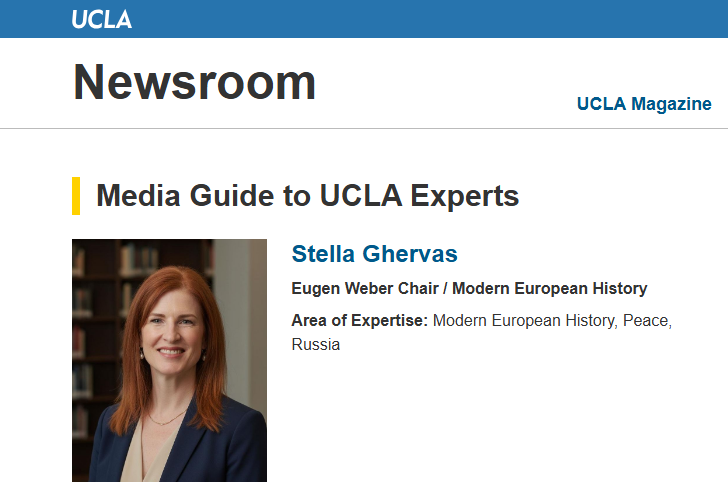
Here is an example of faculty page from UCLA.
Build free tools for students
You can try this method if you have the necessary resources to build tools. Free tools are one of the most linkable assets for earning .edu backlinks because universities often recommend practical resources that students can use regularly. Unlike blog posts, tools can continue attracting backlinks over time because they remain useful long after publication.
How to use this method:
- Identify a common problem students face in your niche
- Create a simple tool that solves that problem
- Build a dedicated landing page explaining how the tool works
- Add instructions and use cases
- Make the tool free to access without barriers
- Search for university resource pages related to your topic
- Reach out to departments or student resource pages
- Suggest your tool as a useful addition for students
Free tool ideas that attract .edu backlinks:
- GPA calculator
- Resume builder
- Citation generator
- Budget calculator
- Study planner
- Career salary calculator
- Reading time calculator
- Academic checklist generator
Difficulty level – Medium to hard
Time required – 2 to 6 months
Estimated cost – $300 to $5,000+ based on tool complexity and development
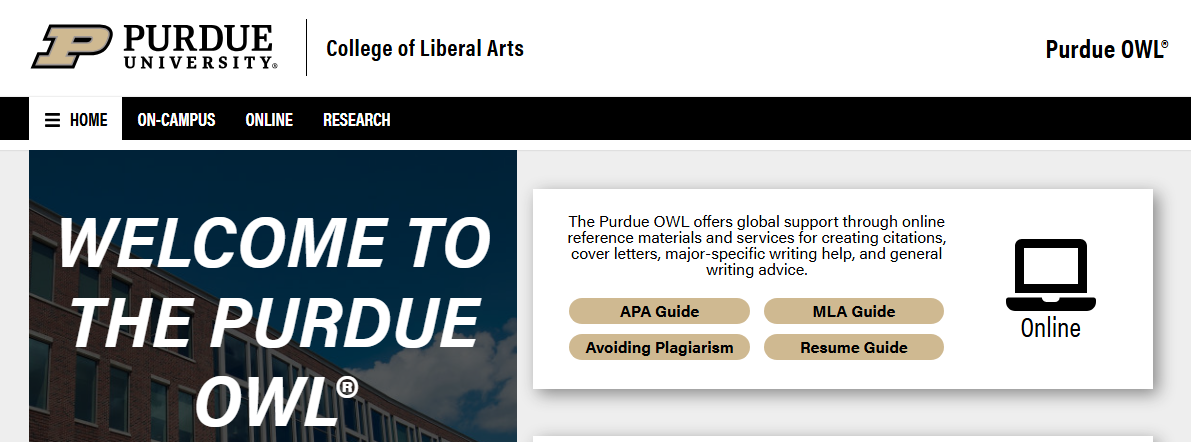
Example of free tools on Purdue University page.
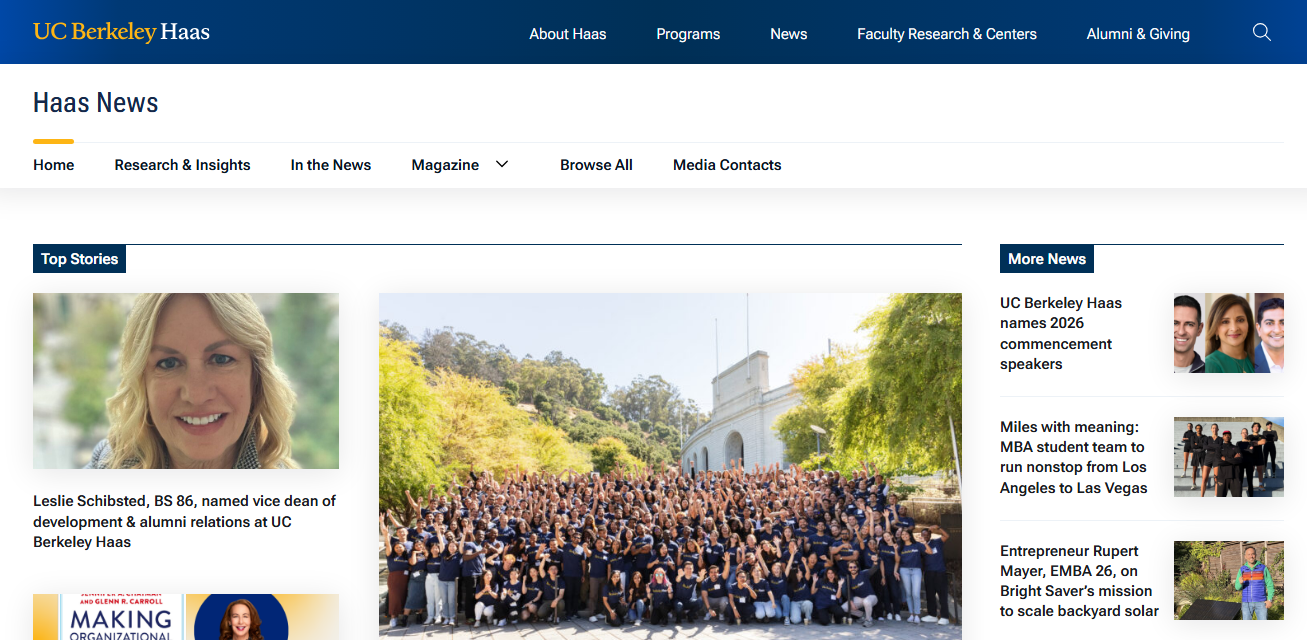
Publish guest content on university blogs
University blogs often publish articles from industry experts and researchers as well as alumni and guest contributors. These blogs cover topics related to education, careers, technology, student life, and research. Publishing content on these platforms can help you earn a contextual .edu backlink while reaching a relevant academic audience.
How to get edu backlinks with this strategy:
- Search for university blogs related to your niche
- Look for guest contribution guidelines or contributor pages
- Identify student blogs or faculty publications
- Pitch a topic connected to education or industry trends
- Focus on useful and non-promotional content
- Include examples or statistics
- Add a natural backlink within the article or author bio
- Build relationships with editors for future opportunities
Difficulty level – Medium
Time required – 1 to 3 months
Estimated cost – $200 to $2,000+
Partner with local colleges and universities
You can always start with the colleges and institutions in your area as they are easy to target. Partnering with local colleges and universities is a practical way to earn .edu backlinks through community involvement and campus collaborations. These partnerships can lead to backlinks from college websites and event pages. This strategy works well because local colleges prefer working with nearby businesses that can provide value to students or support campus initiatives.
How to get .edu backlinks with local partnership:
- Identify colleges and universities in your local area
- Research departments related to your industry
- Offer workshops or training sessions
- Partner on student projects or competitions
- Provide internship or mentorship opportunities
- Sponsor local campus activities or programs
- Ask to be listed on sponsor or community pages
- Maintain long term relationships for future backlink opportunities
Ways to collaborate with local colleges:
- Career development programs
- Student mentorship sessions
- Campus events
- Local business partnerships
- Guest speaking opportunities
- Department collaborations
- Community education programs
Difficulty level – Medium
Time required – 2 to 6 months
Estimated cost – $2000 to $10,000 depending on partnership type and involvement
Launch a free certification or mini course
Free certifications and mini courses are educational assets that universities may recommend to students looking to build skills outside the classroom. It is a good way to get backlinks. A short course or certification page can become a strong .edu link opportunity when positioned as a helpful learning resource.
How to get edu. backlinks with this technique:
- Choose a topic related to your industry or niche
- Create a short course with practical lessons or modules
- Offer a free certificate of completion
- Build a landing page explaining course outcomes
- Include learning objectives and student benefits
- Add downloadable materials or worksheets
- Search for university learning resource pages
- Reach out to departments or career centers
- Suggest your course as a free educational resource
Types of mini courses that attract .edu backlinks:
- Career skills training
- AI training courses
- Resume or interview preparation
- Digital marketing basics
- Coding or technical skills
- Industry introduction courses
- Business or entrepreneurship lessons
- Study and productivity training
Difficulty level – Medium to hard
Time required – 2 to 4 months
Estimated cost – $1000 to $10,000
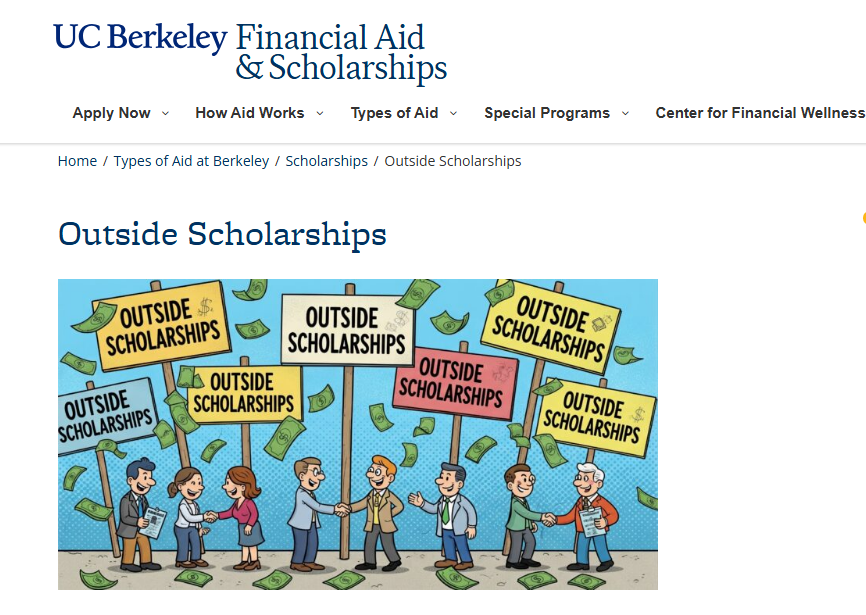
Create scholarships and student grant programs
Compared to other strategies, this one can be a bit expensive. Scholarships and student grants are one of the most common ways to earn .edu backlinks because universities regularly maintain financial aid and scholarship pages. When you create a scholarship or grant, colleges may list it as an opportunity for students and link back to your website.
How to get edu backlinks using this strategy:
- Create a scholarship or grant related to your industry
- Decide eligibility, application rules, and reward amount
- Build a dedicated scholarship page on your website
- Include deadlines and application details
- Search for university scholarship listing pages
- Contact financial aid offices or scholarship coordinators
- Share your scholarship page with relevant departments
- Follow up to request inclusion on scholarship resource pages
Difficulty level – Medium
Time required – 2 to 6 months
Estimated cost – $10,000–$25,000+ depending on scholarship amount and outreach scale
Offer jobs or internships to students
You can also offer jobs or internships to fresh graduates or students. Career and internship pages help universities connect students with job opportunities and internships. Many colleges maintain job boards and employer resource pages where they link to companies offering student friendly roles. Creating a dedicated careers page on your website can increase your chances of earning .edu backlinks from university employment resources.
How to get edu backlinks using this method:
- Create a careers or internships page on your website
- Add internships or entry level opportunities
- Include job descriptions, salary ranges, and application details
- Highlight remote roles or student-friendly positions
- Mention learning opportunities and career growth
- Search for university career centers and job boards
- Reach out to placement offices or career departments
- Request listing on student employment or internship pages
- Keep your careers page updated regularly
Difficulty level – Medium to hard
Time required – 3 to 6 months
Estimated cost – $10,000 to $50,000 depending on hiring setup and outreach
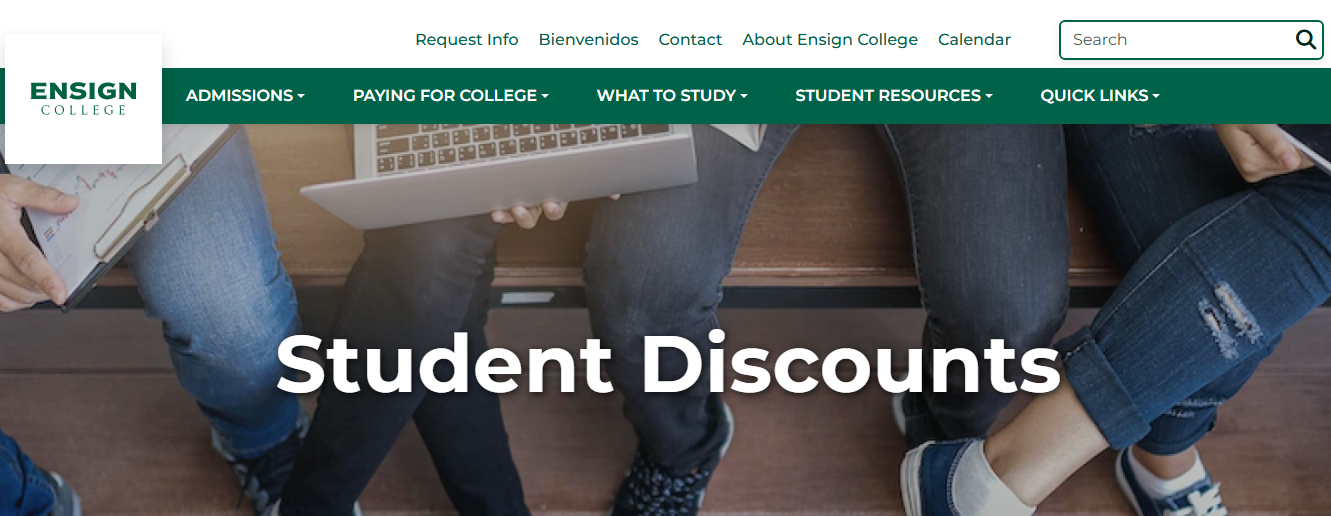
Give student and faculty discounts
Student and faculty discounts are promotional offers created specifically for university communities. Many colleges maintain discount pages and student benefits sections where they link to brands offering special pricing. If your business provides a useful product or tool, offering an academic discount can help you earn .edu backlinks from these pages.
How to use this strategy:
- Create a dedicated student or faculty discount page
- Offer a percentage discount or special plan
- Clearly explain eligibility requirements
- Add verification options such as student email access
- Search for university discount or student benefit pages
- Reach out to student services departments or campus resource teams
- Request inclusion on student savings or software recommendation pages
- Keep discount details updated regularly
Discount ideas that work well:
- Software discounts
- Student subscriptions
- Certification discounts
- Online learning discounts
- Productivity tool discounts
- SaaS free plans for students
Difficulty level – Easy to medium
Time required – 1 to 2 months
Estimated cost – $1000 to $10,000 based on discount structure and outreach
Best tools and platforms for finding edu backlink opportunities
Finding .edu backlink opportunities is not easy, but you can use a few SEO tools and platforms to get the best results. Here’s what you need to run a successful edu backlinks outreach campaign.
| Tool / Platform | Purpose | Best Use Case |
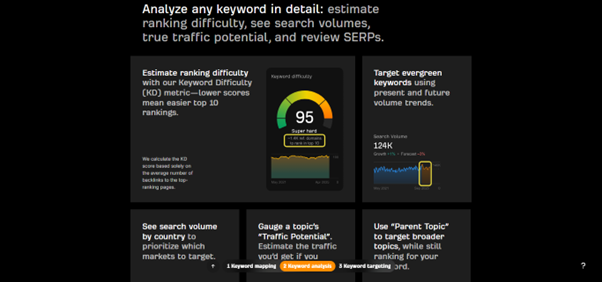
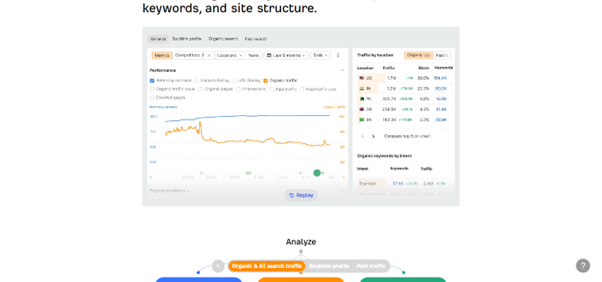
| Ahrefs | Backlink analysis | Find competitor .edu backlinks and broken links |
| SEMrush | SEO and backlink research | Filter backlinks by .edu domains |
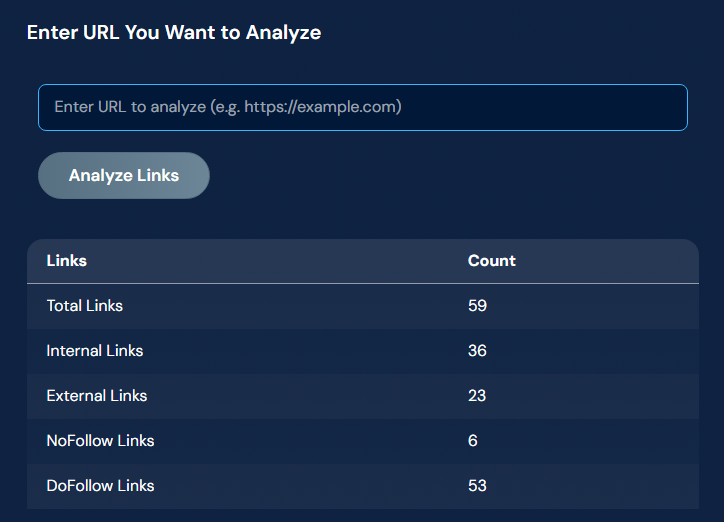
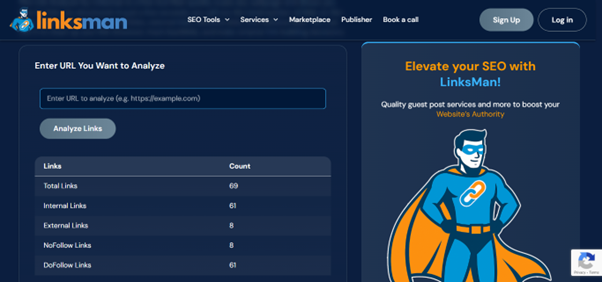
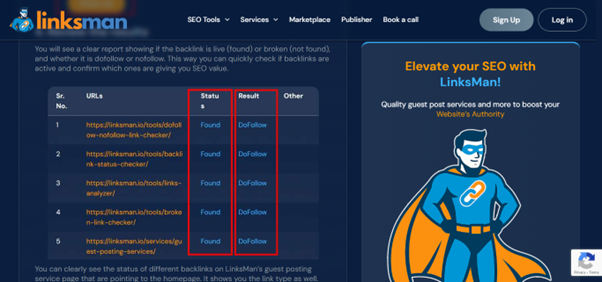
| Free tools from Linksman | Link checking tools | Check broken links, backlink status, dofollow/nofollow links, and link health |
| Screaming Frog SEO Spider | Website crawling | Identify broken links on .edu pages |
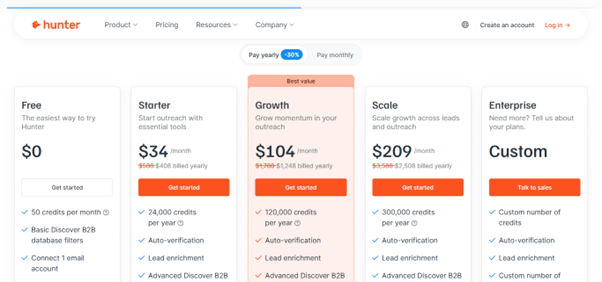
| Hunter.io | Contact discovery | Find university staff or webmaster emails |
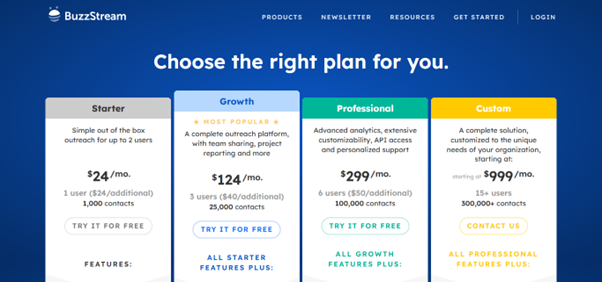
| BuzzStream | Outreach management | Track backlink outreach campaigns |
| Pitchbox | Outreach automation | Scale university outreach |
| Moz Pro | Domain authority analysis | Evaluate authority of .edu websites |
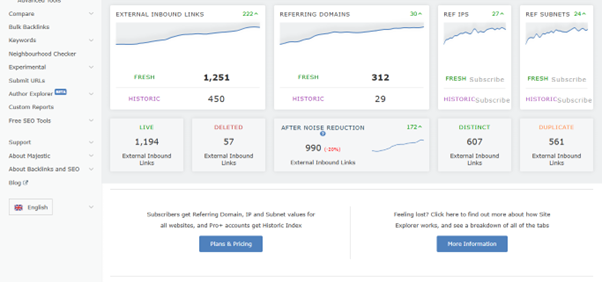
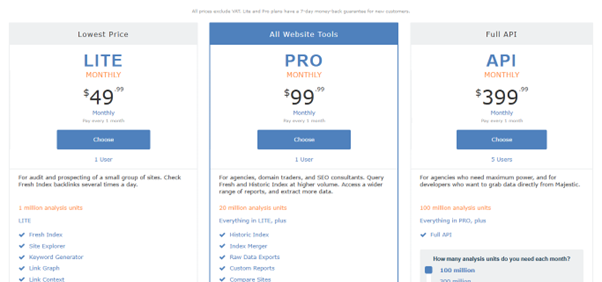
| Majestic | Link quality analysis | Measure trust and backlink strength |
| SpyFu | Competitor research | Get competitor backlink strategies |
| Check My Links | Broken link checking | Quickly scan resource pages |
| College Navigator | University database | Find more than 7000 accredited colleges |
| Peterson’s | College directory | Research institutions and contacts |
| Google Search Operators | Manual research | Find resource pages and .edu opportunities |
What makes an edu backlink powerful?
Not all .edu backlinks have the same SEO value. A strong educational backlink usually comes from a relevant page and appears naturally within content to provide value to users.
- Page relevance – Links from pages related to your niche usually perform better.
- Link placement – Links inside content are stronger than footer or sidebar links.
- Anchor text – Clear and relevant anchor text helps search engines understand the page.
- Traffic potential – Pages with regular visitors can send referral traffic.
- Dofollow vs nofollow – Dofollow links pass SEO value, while nofollow links support visibility.
- Link neighborhood – Pages linking to trusted websites often carry more authority.
- Editorial vs directory links – Contextual links inside articles are usually stronger than directory listings.
What are the different types of .edu backlinks and their SEO value?
Different types of .edu backlinks come from different sections of university and college websites. Some links carry higher authority because they appear on trusted academic pages, while others help improve niche relevance and visibility. Understanding these backlink types can help you focus on the opportunities that best match your industry and outreach strategy.
| Type of .Edu Link | Where It Comes From | SEO Value |
| Resource Page Links | Student resource pages | High authority and relevance |
| Scholarship Links | Financial aid pages | Strong trust signals |
| Career Links | University job boards | Relevant for hiring pages |
| Faculty Links | Professor or faculty pages | Topical authority |
| Research Links | Academic papers or studies | High credibility |
| Student Blog Links | Campus blogs | Natural editorial links |
| Department Links | Academic department pages | Strong niche relevance |
| Event Links | University event pages | Brand visibility |
| Alumni Links | Alumni directories | Trusted profile links |
| Discount Links | Student offer pages | Good for SaaS and tools |
Common mistakes to avoid when building edu backlinks
When building .edu backlinks, you should avoid these common mistakes as it can reduce your chances of getting listed.
- Only focusing on the .edu domain instead of page quality and relevance
- Buying fake or spammy .edu backlinks from low quality sellers
- Sending generic outreach emails without personalization
- Creating scholarship pages with little value or poor information
- Ignoring niche relevance between your content and the university page
- Targeting unrelated departments or resource pages
- Using promotional content instead of educational resources
- Failing to update outdated tools or resource pages
- Reaching out without checking if the university page accepts external links
- Expecting quick results from university outreach campaigns
Wrapping up
.edu backlinks can help improve your website’s credibility when they come from relevant university pages. The best results usually take time and come from useful content and good outreach. Instead of focusing only on the domain extension, try to give universities something worth linking to. Over time, this genuine effort can help you earn quality backlinks that support long term SEO results.
FAQs on .edu backlinks
1. How many .edu backlinks do you need?
There is no fixed number, but many websites start seeing value with 5 to 15 relevant .edu backlinks from trusted pages. A smaller number of high-quality links is often more useful than many low quality placements.
2. What’s the difference between .edu backlinks vs .gov backlinks?
.edu backlinks come from educational institutions, while .gov backlinks come from government websites. Both are trusted domains, but relevance to your niche is more important than the extension.
3. Are .edu backlinks still worth it in 2026?
Yes, .edu backlinks are still valuable because universities often have strong authority and trusted websites. Their impact depends on page relevance and content quality.
4. When can you see results from .edu backlinks?
SEO results from .edu backlinks usually take a few weeks to several months. The timeline depends on your niche, competition, and overall backlink profile.
5. Why are .edu backlinks considered valuable in SEO?
Educational websites usually go through a strict registration and verification process before receiving a .edu domain. Because these institutions are accredited and well-established, their websites often build strong authority over time.
6. Do all educational websites use the .edu domain?
No, not all educational institutions use the .edu extension. Many universities and colleges around the world operate on different domain formats based on their country or education system.
| Domain Extension | Commonly Used In |
| .edu | United States |
| .ac.uk | United Kingdom |
| .edu.au | Australia |
| .ac.in | India |
| .edu.sg | Singapore |